

There’s a particular moment almost everyone who tries calisthenics remembers: the first strict pull-up that isn’t a jump, a kip, or a lucky swing — just you, gravity, and a bar. It usually comes weeks later than expected and feels disproportionately good for such a simple movement. That gap between “this looks easy” and “this is genuinely hard” is basically the whole story of calisthenics in one sentence, and it’s why the discipline has quietly become one of the most talked-about ways to train in the last decade.
This guide goes well beyond the usual “do push-ups and pull-ups” advice. It covers where calisthenics actually comes from, what separates it from ordinary bodyweight exercise, how to build a realistic starting plan, what kind of results you can honestly expect, and who might want to approach it more carefully. If you’ve been wondering whether calisthenics is worth your time, or you’ve already started and want to train smarter, this should answer most of what you’re looking for.
What Is Calisthenics? A Clear Definition
Calisthenics is a system of strength training that uses your own body weight as the resistance, rather than external loads like barbells, dumbbells, or machines. The word comes from the Greek “kallos” (beauty) and “sthenos” (strength) — a name that already hints at the discipline’s original goal: not just raw power, but controlled, aesthetic movement.
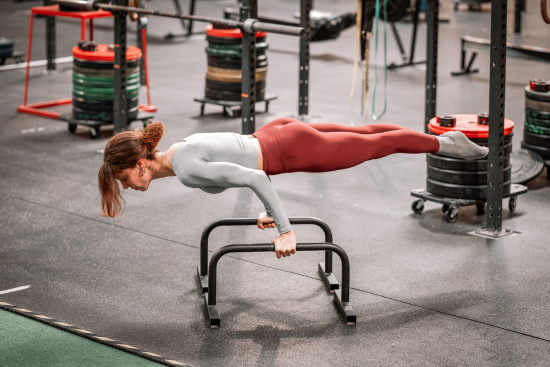
In practice, calisthenics covers a huge range of exercises, from the basics almost everyone has tried at least once — push-ups, squats, lunges, planks — to advanced skills that take years to develop, such as the front lever, the planche, the human flag, and the muscle-up. What ties all of it together is a single principle: your own body is the equipment, and progress comes from changing leverage, range of motion, and tempo rather than adding external weight.
It’s worth separating calisthenics from two things it’s often confused with:
- General bodyweight exercise is any movement that doesn’t use external load — think of a home workout with jumping jacks and sit-ups. Calisthenics is a subset of this that specifically emphasizes progressive, skill-based strength training, often built around static holds and compound movements like the pull-up, dip, and squat.
- Street workout is closely related but leans more heavily into the athletic, often competitive and community-driven side of calisthenics — think parks, bars, and freestyle combinations performed for an audience. Most street workout athletes practice calisthenics; not every calisthenics practitioner is into street workout.
At its core, calisthenics develops strength, muscular endurance, coordination, balance, flexibility, and body control at the same time, which is one reason it appeals to people who find traditional gym routines a bit one-dimensional.
A Short History: Why Calisthenics Isn’t Actually New
Despite its modern, Instagram-friendly image, calisthenics is genuinely ancient. Historical accounts describe bodyweight training as central to military preparation in ancient Greece, where Spartan soldiers combined it with wrestling and combat sports, and similar traditions appeared independently in China and India as part of martial and physical education systems. The Greeks tied physical training to a broader ideal called “kalokagathia” — the harmony of a strong body and a disciplined mind — which is part of why the word itself carries the idea of beauty alongside strength.
The next major chapter happened in 19th-century Germany, where Friedrich Ludwig Jahn, often called the “father of gymnastics,” formalized bodyweight training into structured routines that spread through schools and early fitness institutions. From there, calisthenics became a staple of military fitness tests, physical education classes, and Soviet-era training programs throughout the 20th century.
The version of calisthenics most people recognize today — bar-based, skill-focused, often practiced outdoors in parks — took shape more recently, largely as an urban street movement that grew out of communities in cities like New York, and later spread globally through online video platforms. That’s the piece that explains a lot of its recent popularity: calisthenics didn’t need gyms, equipment budgets, or memberships to spread. It just needed a bar, a phone camera, and people willing to share progress.
| Era | Region | Role of Calisthenics |
|---|---|---|
| c. 600–400 BCE | Ancient Greece | Military and athletic preparation, tied to ideals of physical beauty |
| Antiquity | China, India | Martial and physical education traditions |
| Early 19th century | Germany | Formalized into structured gymnastics by Friedrich Jahn |
| 20th century | Worldwide | Military fitness tests, school PE, Soviet training systems |
| 2000s–present | Global, urban | Street workout movement, bar-based skill training, online communities |
Why Calisthenics Has Exploded in Popularity
A few factors converged to push calisthenics from a niche discipline into a mainstream fitness trend.
First, cost and accessibility matter enormously. A calisthenics routine can be done with nothing but a doorway pull-up bar, a park, or even just floor space, which makes it attractive during economic uncertainty or for people without access to a gym. Second, social media rewarded it visually — static holds like the planche or the human flag are dramatic, photogenic, and easy to track as visible progress markers, which fuels sharing and imitation. Third, there’s a cultural shift toward functional, “real-world” strength: people got tired of machines that isolate single muscles and started wanting strength that transfers to climbing, jumping, and controlling their own bodyweight.
Finally, outdoor calisthenics parks have multiplied in cities across Europe, the Americas, and Asia over the past fifteen years, turning what used to be an individual pursuit into a genuinely social one. Training with a small group at a local park, exchanging tips, and spotting each other on new skills has become part of the culture — arguably as important to calisthenics’ growth as any single exercise.
How to Start With Calisthenics
Starting calisthenics is less about finding the perfect program and more about being honest with your current level. Most beginners overestimate their pulling strength and underestimate how much core and shoulder stability advanced moves demand.
A sensible starting sequence looks like this:
- Assess your baseline. Test how many strict push-ups, bodyweight squats, and — if you have access to a bar — dead-hang seconds you can manage. Don’t worry if pull-ups aren’t possible yet; that’s completely normal.
- Learn the foundational movement patterns first. Push (push-ups, dips), pull (rows, pull-ups), squat, hinge, and core bracing (planks, hollow holds) form the base almost every calisthenics skill is eventually built on.
- Prioritize form over reps. A controlled, full-range push-up trains more muscle and protects joints better than twenty sloppy ones. This matters even more in calisthenics than in weightlifting because there’s no external load to hide behind — bad technique shows up immediately.
- Progress through regressions and progressions, not through adding weight. If a standard push-up is too hard, an incline push-up against a bench builds the same pattern at a manageable difficulty; if it’s too easy, elevating the feet raises the challenge.
- Get basic equipment. A pull-up bar (doorframe-mounted or a park bar), a set of parallel bars or sturdy chairs for dips, and optionally resistance bands to assist pull-ups make a huge practical difference for beginners.
Most people can expect the first three to six months of calisthenics to be about pattern-building and tissue adaptation — tendons and connective tissue adapt more slowly than muscles, which is one reason rushing into advanced static holds too early is a common injury cause.
A Beginner Calisthenics Workout Plan
Below is a realistic, three-day-a-week starting plan. It assumes no prior training background and focuses on building the foundational strength calisthenics is built on. Rest at least one day between sessions.
| Exercise | Sets | Reps / Time | Notes |
|---|---|---|---|
| Knee push-ups or incline push-ups | 3 | 8–12 | Progress to full push-ups as reps get easy |
| Assisted or negative pull-ups | 3 | 5–8 (or 3–5 sec negatives) | Use a band or slow lowering if a full pull-up isn’t possible yet |
| Bodyweight squats | 3 | 12–15 | Focus on depth and control |
| Plank | 3 | 20–40 sec | Keep hips level, avoid sagging |
| Bench or chair dips | 3 | 8–12 | Elevate feet to increase difficulty later |
| Glute bridges | 3 | 12–15 | Builds posterior chain strength for later skill work |
A typical week might place this routine on Monday, Wednesday, and Friday, leaving other days for walking, light mobility work, or complete rest. As push-ups, dips, and squats become manageable at higher rep ranges, you can start layering in intermediate progressions such as pike push-ups (a step toward handstand push-ups), full pull-ups, and tuck-hold core work.
The key mistake to avoid is chasing advanced calisthenics skills — the planche, the front lever, one-arm pull-up progressions — before the basics are solid. Coaches in the discipline consistently point out that skipping foundational strength is the single biggest reason beginners stall out or get injured.
Essential Equipment for Calisthenics (and What You Can Skip)
One of calisthenics’ biggest selling points is how little it requires to get started, but a small amount of equipment does make the early months easier and safer.
Genuinely useful for most people:
- A pull-up bar — doorframe-mounted for home use, or a park bar if one is nearby. This single piece of equipment unlocks most of the pulling side of calisthenics.
- Resistance bands — used to assist pull-ups and dips while pulling strength is still developing, and later repurposed for mobility work and warm-ups.
- Gymnastic rings — not essential at first, but popular once basics are solid, since rings add an instability element that intensifies push and pull movements without changing the load.
- Parallettes or parallel bars — small, low-to-the-ground bars that make dips, L-sits, and eventually handstand work more accessible than working directly off the floor.
Often unnecessary, especially early on:
- Weighted vests and dip belts are useful once bodyweight reps become too easy, but most beginners are years away from that point.
- Specialized calisthenics shoes or grip chalk matter mainly for advanced bar work and aren’t a priority for someone doing their first few months of push-ups and squats.
The practical takeaway: a doorframe pull-up bar and a resistance band or two will cover the vast majority of a beginner calisthenics routine, and everything else can be added later as specific skills demand it.
Nutrition Considerations for Calisthenics Training
Calisthenics doesn’t require a specialized diet, but a few nutritional basics make a noticeable difference in both strength progress and recovery.
Protein intake supports the muscle repair that calisthenics’ compound movements demand — most active adults benefit from somewhere in the range of 1.6 to 2.2 grams of protein per kilogram of bodyweight per day when training regularly, though individual needs vary and this is worth discussing with a nutrition professional for anyone with specific health conditions.
Energy balance determines whether calisthenics training leads primarily to muscle gain, fat loss, or a recomposition of both. Because many calisthenics sessions are demanding on the whole body, undereating too aggressively while learning new skills can slow recovery and increase injury risk, particularly around tendons.
Hydration and joint health deserve more attention in calisthenics than they typically get, since many skills load the wrists, elbows, and shoulders under sustained tension — adequate hydration supports connective tissue function, and some practitioners find that specific joint-focused warm-ups matter as much as diet for feeling good in a session.
None of this needs to be complicated. A varied diet with adequate protein, sensible portion sizes relative to your goals, and consistent hydration covers most of what calisthenics training requires nutritionally.
Beyond the Basics: Where a Beginner Calisthenics Routine Leads
Once the foundational plan above becomes comfortable — typically after two to four months of consistent training — most people naturally progress toward intermediate calisthenics work. This usually includes:
- Full pull-ups and chin-ups in higher volume, often supplemented with wide-grip and close-grip variations to build well-rounded pulling strength.
- Pike push-ups and wall-assisted handstand holds, which begin building the shoulder strength and balance needed for eventual handstand push-ups.
- Tuck front lever and tuck planche holds, short static positions with the knees pulled toward the chest that serve as the entry point into calisthenics’ most iconic advanced skills.
- L-sits, a core and hip-flexor intensive hold that’s often introduced around this stage and remains relevant even for advanced practitioners.
- The muscle-up, widely considered the milestone that separates beginner from intermediate calisthenics, combining an explosive pull-up with a transition into a dip.
Progress at this stage slows down noticeably compared to the rapid early gains beginners see, which is completely normal — tendon and connective tissue adaptation genuinely takes longer than muscular adaptation, and rushing this stage is where most avoidable calisthenics injuries happen.
What Results Can You Actually Expect From Calisthenics?
Calisthenics builds a specific, recognizable physique and set of abilities, but the timeline and outcomes depend heavily on consistency and starting point.
Strength and muscle. In the first two to three months, most beginners see rapid strength gains that come largely from improved neuromuscular efficiency — your nervous system getting better at recruiting muscle — rather than muscle growth itself. Visible muscle changes typically follow from around month three onward with consistent training and adequate protein intake, particularly in the shoulders, back, chest, and core, which calisthenics trains intensively.
Body composition. Because calisthenics sessions are often demanding and full-body, many practitioners report fat loss alongside strength gains, especially when paired with reasonable nutrition. It’s not a guaranteed fat-loss method on its own — that still comes down to overall energy balance — but the metabolic demand of holding static positions and performing compound movements is considerable.
Mobility and control. This is where calisthenics tends to outperform traditional weightlifting: because it constantly trains movement through full ranges of motion under bodyweight load, practitioners often develop noticeably better shoulder mobility, core control, and body awareness than people who train exclusively with machines.
Skill acquisition. Unlike lifting a heavier barbell, calisthenics milestones — a first muscle-up, a ten-second front lever — are often felt as much as seen, and many long-term practitioners describe this skill-based progress as more motivating than a number on a scale.
Realistically, a first strict pull-up might take a genuine beginner anywhere from four weeks to four months depending on starting strength and bodyweight, and an intermediate skill like the muscle-up commonly takes six months to two years of dedicated calisthenics training.
Posture and injury resilience. A less-discussed benefit of consistent calisthenics practice is postural improvement. Because the discipline trains pulling movements (rows, pull-ups) alongside pushing ones (push-ups, dips) in roughly balanced proportion when programmed correctly, it tends to counteract the rounded-shoulder posture common among people who sit at desks for long hours. Combined with the core stability demanded by holds like the plank and L-sit, many long-term practitioners report fewer lower-back issues over time, though this benefit depends heavily on programming both sides of the body evenly rather than favoring pushing exercises.
Self-Taught or With a Coach: What Actually Works Better?
This is one of the most common questions from people starting out, and the honest answer is: it depends on your goals and your relationship with injury risk.
Training calisthenics on your own works well for the basics — push-ups, pull-ups, squats, dips — because these movements are well-documented, forgiving, and low-risk when done with reasonable form. Free online resources, community forums, and local park groups can fill in most of what a beginner needs for the first six to twelve months.
A coach or structured program becomes more valuable once you move into advanced static holds and dynamic skills. Movements like the front lever, planche, and one-arm chin-up place substantial, sustained load on tendons and joints, and poor progression sequencing is a well-known cause of shoulder and elbow injuries among self-taught calisthenics athletes. A coach — in person or through a properly structured program — can catch compensation patterns and adjust load before they become a problem.
There’s also a middle path that a lot of practical calisthenics communities favor: train independently using established progression frameworks, but join a local group or park community for accountability, spotting on new skills, and feedback on form. This social layer is arguably one of calisthenics’ underrated strengths — it’s a discipline that grew up in shared public spaces, and that community habit persists.
Who Should Be Cautious With Calisthenics
Calisthenics is generally accessible, but it isn’t automatically safe for everyone, and a few groups should approach it carefully or get medical clearance first.
- People with existing shoulder, elbow, or wrist injuries should be cautious, since many calisthenics movements — dips, planche progressions, handstands — place significant load directly through these joints.
- Complete beginners with very low baseline strength attempting advanced static holds too soon face a real risk of tendon overload, since connective tissue strengthens more slowly than muscle.
- People with uncontrolled cardiovascular conditions should get medical guidance before high-intensity bodyweight circuits, which can spike heart rate quickly.
- Pregnant individuals can often continue modified bodyweight training, but certain positions (deep core compression, inversions, high-impact plyometrics) generally require professional guidance.
- Growing children and early teens can safely do basic bodyweight movement, but loaded, high-skill calisthenics work is usually better introduced gradually and under supervision.
None of this means calisthenics is inherently risky — done with sensible progressions, it’s one of the more joint-friendly training styles available, largely because you’re always working with a load your body has already adapted to carrying. The injuries that do occur are overwhelmingly linked to skipping steps, not to the discipline itself.
How Calisthenics Differs From Weightlifting and Other Training Styles
Compared to traditional gym-based weightlifting, calisthenics has a few distinct characteristics worth understanding before you choose (or combine) an approach.
Progressive overload works differently. In weightlifting, you typically add more weight to the bar. In calisthenics, you change leverage — moving your hands or feet to make a movement mechanically harder — or add reps, tempo control, and pauses. This makes calisthenics inherently more technical: an exercise can look nearly identical while being dramatically harder due to a small positional change.
Calisthenics also tends to demand more full-body coordination per exercise. A barbell bench press isolates the pressing muscles fairly cleanly; a handstand push-up simultaneously demands shoulder strength, core bracing, and balance. This is part of why calisthenics practitioners often report better “functional” carryover to real-world movement and other sports, even though raw maximal strength numbers (like a one-rep max squat) usually favor dedicated weightlifters.
Equipment needs are minimal by comparison, which affects training logistics more than most people expect — a calisthenics session can happen in a hotel room, a park, or a small apartment, while a serious strength-training session generally needs a gym.
Finally, the ceiling for advanced practitioners is genuinely high. Elite calisthenics athletes performing planche push-ups or one-arm pull-ups are producing relative strength (strength compared to bodyweight) that rivals or exceeds what many trained weightlifters achieve, which is one reason strength coaches increasingly borrow calisthenics elements for well-rounded programming rather than treating it as a beginner-only pursuit.
Interesting Facts About Calisthenics
A handful of details tend to surprise people who are new to the discipline:
- The word “calisthenics” predates modern fitness culture by roughly two centuries — it was already in use as a formal training term in early 19th-century Europe.
- Military fitness tests around the world, including the U.S. Army’s physical fitness assessments, have historically relied heavily on calisthenics staples like push-ups and pull-ups precisely because they require no equipment and scale to large groups.
- The human flag, one of calisthenics’ most recognizable skills, requires such specific lat, oblique, and grip strength that even many experienced weightlifters can’t perform it without dedicated practice.
- Outdoor calisthenics parks, sometimes called “street workout parks,” have become a distinct category of public fitness infrastructure in many cities, with some municipalities installing dozens of them as part of public health initiatives.
- Several elite gymnasts have credited calisthenics-style bodyweight conditioning as foundational to skills used in artistic gymnastics, showing how closely the two disciplines are historically linked.
- Calisthenics World Championships and organized street workout competitions now exist, complete with judged criteria for strength, control, and difficulty of static holds — a sign of how far the discipline has moved from purely recreational training.
Common Mistakes Beginners Make
A few patterns show up repeatedly among people who quit calisthenics early or get frustrated with slow progress:
- Chasing advanced skills too early, particularly attempting front lever or planche progressions before basic pulling and pushing strength is established.
- Neglecting pulling movements. Push-ups and dips are more intuitive for most beginners, which often leads to an imbalance between pushing and pulling strength that increases injury risk over time.
- Training every day without recovery, especially for grip and shoulder-heavy skills, which can lead to overuse injuries in tendons that adapt slowly.
- Ignoring mobility work, particularly for the shoulders and wrists, both of which take disproportionate load in calisthenics compared to typical gym training.
- Comparing progress to social media, where viral clips of advanced calisthenics athletes rarely show the years of foundational work behind a single impressive hold.
Final Thoughts
Calisthenics rewards patience more than almost any other style of training, but it also gives back something a lot of gym routines don’t: visible, skill-based milestones that feel earned. Whether you end up chasing a strict muscle-up, simply want a sustainable way to stay strong without a gym membership, or you’re drawn to the community that’s grown up around outdoor bars and parks, calisthenics offers a genuinely flexible path into serious strength training — as long as the basics come first.
FAQ
Is calisthenics good for beginners?
Yes. Most calisthenics fundamentals — push-ups, squats, planks, assisted pull-ups — are naturally scalable to any starting fitness level through regressions, which makes the discipline one of the more beginner-friendly strength training options available.
How often should I train calisthenics per week?
Three sessions per week with at least one rest day between them is a solid starting frequency for most beginners, allowing enough recovery for tendons and connective tissue to adapt alongside muscles.
Can calisthenics build real muscle, or just endurance?
Calisthenics can build substantial muscle, particularly in the upper body and core, provided you progressively make exercises harder through leverage changes, added reps, or tempo — the same overload principle that drives muscle growth in weightlifting.
Do I need a pull-up bar to start calisthenics?
Not immediately. Push-ups, squats, dips on a chair, and core work can be done with no equipment at all, though a pull-up bar becomes important fairly quickly since pulling strength is central to most calisthenics progressions.
Is calisthenics better than the gym?
Neither is objectively “better” — calisthenics tends to build more functional, full-body coordination and requires minimal equipment, while traditional gym training with free weights makes it easier to isolate specific muscles and track maximal strength. Many experienced athletes combine both.
How long does it take to get a first pull-up in calisthenics?
For a genuine beginner, anywhere from four weeks to four months is realistic, depending on starting bodyweight and upper-body strength, with assisted and negative pull-ups typically bridging the gap.
Can calisthenics help with weight loss?
Yes, as part of an overall calorie deficit — calisthenics circuits are often demanding enough to burn significant energy, and building muscle through calisthenics also raises resting energy expenditure over time.
Is calisthenics safe for older adults?
Generally yes, when scaled appropriately. Bodyweight training tends to be joint-friendly and improves balance and functional strength, both especially valuable for older adults, though starting under guidance is wise if there are existing joint issues.