Few companies in the history of Nigeria’s downstream oil sector have generated as much admiration, controversy and debate as Zenon Petroleum and Gas Limited. Founded by Nigerian businessman Femi Otedola, Zenon grew in a few years from a small diesel trading operation into the dominant supplier of automotive gas oil (diesel) in Africa’s most populous country. At its peak it fuelled factories, telecom masts, banks and transport fleets across Nigeria. It owned tank farms, ocean-going vessels and bank shares, and it became the springboard for one of the most-watched fortunes in African business.
Zenon is also a case study in how quickly an empire built on commodities and leverage can unravel. The 2008 global oil price crash, a sharp devaluation of the naira and the Nigerian banking crisis pushed the company into a debt spiral that its founder later described as the darkest chapter of his career. A few years later, Zenon was at the centre of one of Nigeria’s most dramatic political scandals: the 2012 fuel subsidy probe and the bribery sting involving lawmaker Farouk Lawan.
This article covers the full history of Zenon Petroleum and Gas: its origins, business model, infrastructure, its role in Nigeria’s energy economy, its expansion into African Petroleum (later Forte Oil), the financial collapse, the subsidy controversy, and what the company’s story teaches about doing business in emerging markets.
Zenon Petroleum and Gas at a Glance
| Detail | Information |
|---|---|
| Full name | Zenon Petroleum and Gas Limited (often called Zenon Oil or Zenon Oil and Gas) |
| Founder | Femi Otedola |
| Headquarters | Lagos, Nigeria |
| Incorporation | Commonly dated to 1999; rapid expansion from 2003 |
| Industry | Downstream oil and gas: procurement, import, storage, marketing and distribution of petroleum products |
| Core product | Automotive gas oil (diesel); also kerosene and other refined products |
| Sister companies | Seaforce Shipping Company Limited, F.O. Transport Nigeria Limited |
| Key infrastructure | Storage depots at Ibafon and Apapa, Lagos; a fleet of product tankers |
| Major investment | 28.7% stake in African Petroleum Plc (later Forte Oil, now Ardova Plc) |
| Turning point | 2008–2009 oil price collapse and naira devaluation |
Who Founded Zenon? Femi Otedola’s Background
To understand Zenon, you need to understand its founder. Femi Otedola was born in 1962 into a prominent Nigerian family. His father, Sir Michael Otedola, was a publisher who later served as governor of Lagos State. The younger Otedola started his working life in the family business. In the late 1980s, he ran marketing for his family’s printing press before moving into trading petroleum products.
Before Zenon existed, Otedola had already tried his hand at trading and finance. He set up Centre Force Limited in 1994, a company focused on trading, investment and finance. But his decisive move came when he recognised a gap that most Nigerians lived with every day without questioning it: the country’s chronic shortage of reliable electricity.
In his memoir, Making It Big: Lessons from a Life in Business, Otedola describes how Nigeria’s failed electricity grid and broken fuel supply chain created the opening he exploited. He presents his rise in diesel not as a grand master plan but as a strategic pivot born out of a national crisis. If the power grid had worked, factories and businesses would not have needed diesel generators on such a huge scale, and the market Zenon came to dominate would have been far smaller.
Why Diesel? The Economics Behind Zenon’s Business Model
Nigeria has long been one of the world’s largest producers of crude oil, yet for decades it has struggled to refine enough of its own fuel. State-owned refineries in Port Harcourt, Warri and Kaduna operated far below capacity for years, which left the country heavily reliant on imported refined products.
At the same time, the national electricity grid delivered only a fraction of what the economy needed. Manufacturing plants, banks, hotels, hospitals, mobile network operators and households all relied on generators, and most large generators run on diesel. This created a vast, steady and largely price-insensitive demand for automotive gas oil.
Unlike petrol (premium motor spirit), whose pump price was regulated and subsidised for much of Nigeria’s history, diesel was deregulated. That meant importers could buy diesel on international markets, ship it to Lagos, store it and sell it at market prices without depending on government subsidy payments. For a trader with access to finance, storage and ships, diesel offered something rare in Nigeria’s downstream sector: a commercially driven business with strong margins.
Zenon’s business model rested on three pillars:
- Procurement and import. Buying diesel in bulk on international markets and shipping it to Nigeria.
- Storage. Owning tank farms near the ports so that product could be discharged, held and released to customers on demand.
- Distribution and logistics. Delivering fuel by sea and by road to industrial clients, using its own vessels and trucks.
The company did not merely trade fuel; it controlled the physical chain from the ship to the customer’s generator. That vertical integration became its main competitive advantage.
From Door-to-Door Sales to Market Leader: The Early Years
Zenon’s beginnings were modest. In his memoir, Otedola recalls selling diesel door to door in drums, riding along in a pick-up van with a driver. From there, he moved into buying diesel in bulk, renting storage tanks, then acquiring a tank farm, and finally importing diesel directly by vessel.
Sources differ on the exact founding date. Corporate records and several profiles date the incorporation of Zenon Petroleum and Gas to 1999, when Otedola was 37, as an indigenous company focused on procuring, storing, marketing and distributing petroleum products. Other accounts, including widely cited biographies, place the company’s establishment in 2003, which is when Zenon’s large-scale expansion began. The most reasonable reading is that the company existed from 1999 and became a major force from around 2003.
The Family Loan That Changed Everything
A key detail Otedola has shared publicly is that Zenon’s growth was financed early on with family support. He has said that a loan of £250,000 from his father helped scale up the business. In a sector where access to capital determines who can import a cargo and who cannot, that early injection of money made it possible to move from small trades to vessel-sized shipments.
Building the Logistics Chain
Otedola understood early that whoever controlled transport controlled the diesel trade. In 2001 he founded Seaforce Shipping Company Limited to compete in a shipping market that had long been dominated by foreign operators. Seaforce grew into one of Nigeria’s largest private shipping firms, with a fleet reported at over 150,000 metric tonnes of combined capacity. Some of the vessels were named after members of Otedola’s family, including one called Mt. Sir Michael in honour of his father.
On land, F.O. Transport Nigeria Limited provided trucking capacity. Combined with Zenon’s trading arm and storage depots, this gave the group control over nearly every stage of the supply chain.
One of the main operational advantages Zenon gained was at the ports. Profiles of the company describe how its control of berthing and offloading capacity allowed its tankers to discharge while competitors waited in queues. In a congested port like Apapa, where vessel delays can cost tens of thousands of dollars a day in demurrage, that advantage was worth a great deal.
Infrastructure: Tank Farms, Vessels and the Apapa Ambition
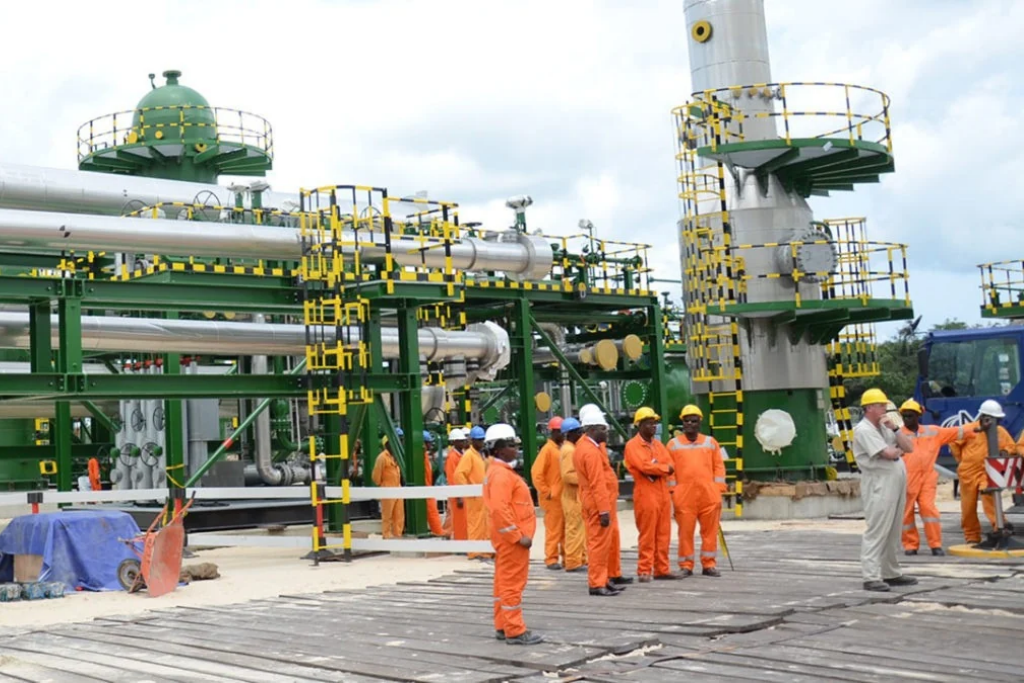
In 2004, Zenon made one of its largest investments: N15 billion (then roughly $100 million) in downstream infrastructure. The money went into storage depots at Ibafon and Apapa in Lagos and into four cargo vessels, giving the company combined storage capacity of about 147,000 metric tonnes.
Company statements at the time put the land-based depots’ capacity at more than 80 million litres of refined products, with the vessels adding over 75 million litres of floating storage. For a privately owned Nigerian company, this was a remarkable asset base.
The $1.5 Billion Syndicated Loan
Zenon’s growth attracted the attention of Nigeria’s banks, which were themselves expanding fast after the 2005 banking consolidation. In March 2007, ten banks approved a syndicated loan of $1.5 billion (about N193.5 billion) to Zenon. The stated purpose was to give the company working capital and to fund what was described as the largest premium motor spirit (petrol) storage facility in Africa.
Zenon had acquired 25 acres of land in Apapa for the project and planned a 30,000-tonne petrol storage facility there. At the time, Otedola also said the group was not considering a listing of Zenon on the Nigerian Stock Exchange, which meant the company remained privately held and was financed mainly through bank debt rather than public equity.
That reliance on bank leverage would later matter a great deal.
Market Dominance: How Big Was Zenon?
By the mid-2000s, Zenon was by far the largest player in Nigeria’s diesel market. Estimates of its market share vary by source and year, but they are consistently extraordinary. Profiles of the company have put its share at around 90%, while Otedola himself claimed that by 2004 he controlled 93% of the diesel market. Other reporting gives a figure of 91%.
Whatever the precise number, the scale was unusual for any single company in a major commodity market. Zenon’s client list reportedly included many of the largest companies operating in Nigeria, among them firms in beverages, consumer goods, cement and telecommunications such as Coca-Cola, Nestlé, Unilever, Nigerian Breweries, the Dangote Group and MTN.
Telecom operators were an especially important segment. Nigeria’s mobile revolution in the early 2000s required thousands of base station sites across the country, and most of them depended on diesel generators. A reliable diesel supplier was therefore critical to keeping networks running.
Beyond Diesel: Kerosene and Financial Investments
Zenon did not limit itself to diesel. It also became an important player in the kerosene market, a product widely used in Nigerian households for cooking and lighting.
Flush with trading profits and bank credit, Zenon also invested heavily in the financial sector. It became one of the largest shareholders in several Nigerian banks, including Zenith Bank and United Bank for Africa (UBA). In February 2007, Zenon also bought Stallion House on Victoria Island, Lagos, from the federal government for N2.3 billion, adding commercial real estate to the group’s portfolio.
These moves made Zenon look like a conglomerate rather than a fuel trader. They also increased its exposure to the Nigerian stock market, which would prove costly when markets turned.
The African Petroleum Acquisition and the Birth of Forte Oil
Zenon’s most consequential strategic move was its investment in African Petroleum Plc (AP), one of Nigeria’s oldest and best-known fuel marketing companies, with a nationwide network of filling stations and a stock market listing.
Building a Controlling Stake
In 2007, Zenon acquired a 28.7% stake in African Petroleum, a deal reported by Reuters at the time. Later that year, in December 2007, Otedola personally bought another 29.3% of AP for N40 billion. Combined with Zenon’s holding, this brought Otedola’s effective stake to 55.3% and gave him control of the company. A merger between AP and Zenon was also discussed publicly in early 2008.
The market reacted enthusiastically. After Otedola’s entry, African Petroleum’s share price climbed steeply, with market capitalisation reportedly rising from N36 billion to N217 billion in about six months.
Strategic Logic
The logic of the deal was clear. Zenon was strong in bulk diesel supply to industrial clients, while AP had a retail network and a recognised brand. Together they could cover both business-to-business and retail fuel markets. In October 2009, Otedola announced plans to upgrade AP’s liquefied petroleum gas (LPG) storage terminals in Lagos, Kano and Port Harcourt, signalling an intention to grow in cooking gas as well.
From African Petroleum to Forte Oil
In December 2010, African Petroleum was rebranded as Forte Oil Plc. Under Otedola’s leadership, Forte Oil was restructured, cleaned up its balance sheet and diversified into power generation. Through its subsidiary Amperion Limited, Forte Oil financed the acquisition of the 414 MW Geregu Power Plant for $132 million as part of the privatisation of Nigeria’s power sector.
The turnaround was dramatic. Forte Oil’s share price rose by about 1,321% in 2013, one of the strongest performances on the Nigerian Stock Exchange that year, and Otedola returned to the Forbes list of African billionaires in November 2014.
Otedola later sold his controlling stake in Forte Oil in 2019, and the company was subsequently renamed Ardova Plc. He kept his interest in Geregu Power, which became a separate business and later listed on the Nigerian Exchange.
The African Petroleum investment is therefore the bridge between Zenon’s era and the second phase of Otedola’s career: Zenon provided the initial stake, and Forte Oil and Geregu became the vehicles for his recovery.
The 2008 Crash: How Zenon’s Fortunes Collapsed
Zenon’s story took its sharpest turn in 2008. The global commodity boom that had pushed crude oil to record highs collapsed almost overnight when the financial crisis hit.
The Diesel Cargo That Arrived Too Late
Otedola has described in detail how the crash unfolded. In 2008, with crude near its peak of around $147 per barrel, he placed a diesel order reported at roughly $500 million for import into Nigeria. By the time the cargo arrived, crude prices had collapsed to around $40 per barrel or lower, and the value of the diesel on the water had fallen to a fraction of its purchase price. In the Guardian’s account of the memoir, he recalls telling himself, “I said to myself, I’m finished”.
For a company that bought on credit and sold at market prices, this was devastating. Zenon had paid peak prices for a product it now had to sell into a market where prices had fallen sharply.
The Naira Devaluation
The commodity crash triggered a second blow. As oil revenues fell, Nigeria’s foreign exchange inflows dropped, and the Central Bank of Nigeria devalued the naira. Loans that had been taken when the naira traded at roughly N117 to N120 per US dollar suddenly had to be repaid at around N165 to N167 per dollar. Because Zenon’s imports were financed in dollars but sold in naira, the devaluation sharply inflated its debt burden.
The Stock Market Crash
The third blow came from the Nigerian stock market, which fell heavily in 2008 and 2009. Zenon and Otedola held large equity positions in banks and in African Petroleum, often financed with borrowed money. As share prices collapsed, the value of these holdings fell while the debts remained.
N220 Billion in Debt
In his memoir, Otedola says that in total he lost more than $1.3 billion, around N220 billion, through the combination of devaluation, the oil price plunge and the stock market crash. His debt was spread across eight Nigerian banks, including Zenith Bank, Access Bank, GTBank and UBA.
Otedola also describes how the attitude of banks changed. During the boom, he says, lenders competed fiercely for his business and deposits; once his business was in trouble, they became aggressive in pursuing repayment. He singles out Access Bank as less sympathetic than other lenders during this period.
The losses were so large that they were considered a risk to the stability of parts of Nigeria’s banking system, which was already under strain during the 2009 banking crisis.
The AMCON Settlement
Nigeria responded to the banking crisis by creating the Asset Management Corporation of Nigeria (AMCON) in 2010 to buy non-performing loans from banks and stabilise the sector. Otedola’s debts became part of this process.
According to his own account, AMCON bought his N220 billion debt for N140 billion, meaning the banks absorbed an N80 billion haircut. Otedola then made what he called the painful decision to clear his debts as quickly as possible so he could rebuild.
The settlement came at a high cost. As part of the arrangement, Otedola gave up extensive assets, including estates in Lagos, Abuja and Port Harcourt, truck parks, filling stations, storage tank farms in Apapa, major bank and oil shareholdings, and a private jet. The tank farms that had once been at the heart of Zenon’s competitive advantage were among the assets surrendered.
This marked the effective end of Zenon as the dominant diesel supplier it had been. Otedola later said he adopted a far more risk-averse approach to business, and his attention shifted to African Petroleum and Forte Oil after he had sold off Zenon assets.
The 2012 Fuel Subsidy Probe and the Farouk Lawan Bribery Scandal
Even as Zenon’s commercial importance declined, the company returned to national headlines in 2012 through one of the most dramatic political scandals in Nigeria’s recent history.
Background: The Subsidy Protests
On 1 January 2012, the government of President Goodluck Jonathan removed the subsidy on petrol, causing pump prices to nearly double overnight. The decision triggered nationwide protests and a general strike known as Occupy Nigeria. Under pressure, the government partially restored the subsidy, and the House of Representatives set up an ad hoc committee, chaired by Farouk Lawan, to investigate how the subsidy scheme had been managed. The probe uncovered evidence of massive fraud, with billions of dollars paid to marketers for fuel that was allegedly never imported.
Zenon’s Name in the Report
The committee’s report, presented in April 2012, named Zenon among companies accused of wrongdoing. According to Otedola’s later court filing, Lawan had told him that Zenon would be indicted for buying foreign exchange from the Central Bank of Nigeria without importing fuel. Reports from the period gave very different figures for what Zenon allegedly owed, from about $1.4 million in some accounts to a far larger refund demand in others.
Otedola consistently denied that Zenon had taken part in the subsidy scheme. That position matters because Zenon’s core business was diesel, which was not subsidised.
The Sting Operation
In June 2012, Otedola told ThisDay newspaper that Lawan had demanded a bribe of $3 million to remove Zenon from the list of indicted companies. Otedola said he had reported the demand to the State Security Service (SSS), which then organised a sting operation. Marked dollar bills totalling $620,000 were handed over in two instalments, $500,000 to Lawan and $120,000 to the committee secretary, Boniface Emenalo, and the encounters were recorded on video.
Footage later showed that on 21 April 2012, Lawan had moved a motion on the floor of the House to remove Zenon from the list of indicted companies. The Deputy Speaker asked him directly whether the recommendation came from his committee, and Lawan confirmed it did.
Court Cases and Aftermath
Lawan initially admitted receiving the money but claimed he had taken it as evidence of an attempt to bribe him, and that he had handed it over to another lawmaker. That lawmaker later denied this in court. Otedola, for his part, told the court that he had not offered the bribe; Lawan had demanded it.
The case dragged on for years. In 2014, the Court of Appeal refused to quash the charges, finding a prima facie case against Lawan and Emenalo. In 2021, a High Court of the Federal Capital Territory convicted Lawan and sentenced him to prison, closing a major chapter of the case.
In 2012 Otedola also filed a N250 billion lawsuit against the Speaker of the House and Lawan, challenging attempts to relist his company among the indicted firms.
Otedola’s Later Statements
The subsidy affair continued to follow Otedola for more than a decade. In September 2025, he issued a statement firmly rejecting renewed allegations, calling them false and baseless. He insisted that Zenon never participated in the subsidy scheme and described himself as the whistleblower who had alerted the authorities to the fraud.
For readers trying to understand Zenon, the key points are these: the company was named in a parliamentary report, its founder alleged an extortion attempt and helped the security services expose it, the lawmaker involved was ultimately convicted, and Otedola has always denied that Zenon benefited from subsidy payments.
Zenon’s Impact on Nigeria’s Downstream Oil Sector
Zenon’s legacy goes beyond the fortunes of its founder. It influenced how Nigeria’s downstream sector developed in several ways.
Proving the Indigenous Model
When Zenon emerged, much of Nigeria’s oil logistics, including shipping and large-scale storage, was dominated by foreign companies. Zenon showed that a Nigerian-owned company could compete at scale, own vessels and operate major tank farms. This helped encourage a generation of local downstream players and fed into policy debates that later produced the Nigerian Oil and Gas Industry Content Development Act of 2010.
Infrastructure Entrepreneurship
Analysts reviewing Otedola’s memoir have argued that his dominance in diesel was less about inventing something new than about creating efficiency in a chaotic system. By securing berthing, storage and transport, Zenon solved real logistical problems for customers who could not afford fuel interruptions. In that sense, Zenon’s value lay in reliability as much as in the product itself.
Market Concentration Risks
At the same time, a single company controlling around 90% of a critical fuel supply raises obvious questions about concentration risk. When Zenon got into trouble, the effects spread to banks and the broader financial system. The episode illustrated how closely Nigeria’s banks, stock market and commodity traders were connected during the 2000s boom.
Lessons on Leverage
Zenon’s collapse remains a textbook example of combined market risks. The company faced commodity price risk, currency risk and equity market risk at the same time, all amplified by debt. Each risk on its own might have been survivable. Together, they were nearly fatal.
Key Business Lessons from the Zenon Story
The rise and fall of Zenon Petroleum and Gas offers practical lessons for entrepreneurs, investors and students of emerging-market business.
1. Find the problem behind the market. Zenon’s demand came from a structural failure: unreliable electricity. Understanding why customers need a product helps explain how durable that demand is.
2. Control the bottleneck. Zenon’s real advantage was logistics: ships, tanks, trucks and port access. In many emerging markets, infrastructure rather than the product is where value is captured.
3. Match the currency of debts to the currency of revenue. Borrowing in dollars and earning in naira worked during a stable exchange rate but became devastating when the currency was devalued.
4. Hedge commodity exposure. Buying a large cargo at peak prices without protection against a price fall exposed the company to the full force of the 2008 crash.
5. Avoid stacking risks. Using borrowed money to buy bank shares while running a leveraged commodity business concentrated risk instead of spreading it.
6. Banks are fair-weather friends. Otedola’s own account of lenders who courted him in good times and pursued him aggressively in bad times is a reminder that relationships with creditors change with circumstances.
7. Recovery is possible. After surrendering most of his assets, Otedola rebuilt his fortune through Forte Oil and Geregu Power, adopting a more conservative philosophy. The Zenon collapse did not end his career.
Femi Otedola After Zenon
Although Zenon is no longer the market force it once was, its founder remains among Nigeria’s most influential businesspeople. After rebuilding through Forte Oil, he sold that company in 2019 and concentrated on power generation through Geregu Power. He also built a large shareholding in FBN Holdings, the parent company of First Bank of Nigeria, and later became chairman of the group, now known as First HoldCo.
In August 2025, Otedola published his memoir, Making It Big: Lessons from a Life in Business. The book became a bestseller and includes the most detailed first-hand account of Zenon’s history, from selling diesel in drums to the AMCON settlement. He has since said he is working on a sequel titled Making It Bigger.
Otedola is also known for his philanthropy, including large donations to educational and health initiatives in Nigeria. His children include DJ Cuppy (Florence Otedola) and Temi Otedola, both public figures in their own right.
Zenon Petroleum Timeline
- 1994 – Femi Otedola founds Centre Force Limited, a trading and finance company.
- 1999 – Zenon Petroleum and Gas Limited is incorporated in Lagos.
- 2001 – Seaforce Shipping Company Limited is founded; F.O. Transport Nigeria Limited is registered.
- 2003 – Zenon begins its rapid large-scale expansion in diesel import and distribution.
- 2004 – Zenon invests N15 billion in depots at Ibafon and Apapa and in four cargo vessels.
- 2004–2005 – Zenon becomes the dominant diesel supplier in Nigeria, with estimates of around 90% market share.
- February 2007 – Zenon acquires Stallion House in Victoria Island for N2.3 billion.
- March 2007 – Ten banks approve a $1.5 billion syndicated loan for Zenon.
- May 2007 – Zenon acquires a 28.7% stake in African Petroleum.
- December 2007 – Otedola personally buys a further 29.3% of AP, raising his combined stake to 55.3%.
- 2008–2009 – Oil price collapse, naira devaluation and stock market crash leave Otedola with debts of about N220 billion.
- December 2010 – African Petroleum is rebranded as Forte Oil Plc.
- 2010s – AMCON acquires the debt; Otedola surrenders major assets, including Apapa tank farms.
- April–June 2012 – Zenon is named in the fuel subsidy probe report; the Farouk Lawan bribery sting becomes public.
- 2013 – Forte Oil’s share price rises by over 1,300%.
- 2019 – Otedola sells his controlling stake in Forte Oil.
- 2021 – Farouk Lawan is convicted by an FCT High Court.
- 2025 – Otedola publishes Making It Big, with a detailed account of Zenon’s history.
Frequently Asked Questions About Zenon Petroleum
What is Zenon Petroleum and Gas Limited?
Zenon Petroleum and Gas Limited is a Nigerian downstream oil and gas company founded by Femi Otedola and headquartered in Lagos. It specialised in importing, storing, marketing and distributing refined petroleum products, above all diesel. During the 2000s it was the largest diesel supplier in Nigeria.
Who owns Zenon Petroleum?
Zenon was founded and controlled by Femi Otedola, who served as its president and chief executive. It was privately held and never listed on the Nigerian Stock Exchange.
When was Zenon founded?
Most corporate sources date its incorporation to 1999. Many biographies cite 2003, which is when the company began its rapid expansion in diesel imports.
How large was Zenon’s share of the diesel market?
Estimates generally put Zenon’s share of Nigeria’s diesel market at around 90% at its peak in the mid-2000s, with figures of 91% and 93% also cited.
What happened to Zenon in 2008?
A diesel cargo bought when crude was near $147 per barrel arrived after prices had collapsed. This, combined with a sharp naira devaluation and a stock market crash, left Otedola with around N220 billion in debt across eight banks. The debt was later taken over by AMCON, and Otedola gave up major assets, including Zenon’s Apapa tank farms.
Was Zenon involved in the fuel subsidy scandal?
Zenon was named in the 2012 House of Representatives subsidy probe report. Otedola has always denied that Zenon took part in the subsidy scheme and said committee chairman Farouk Lawan demanded a $3 million bribe to remove the company’s name. A sting operation with the security services captured Lawan receiving $620,000, and he was later convicted.
What is the connection between Zenon and Forte Oil?
In 2007, Zenon bought a 28.7% stake in African Petroleum. Combined with Otedola’s personal purchase, this gave him control of the company, which was renamed Forte Oil in 2010. Forte Oil later acquired the Geregu Power Plant, and Otedola sold his stake in Forte Oil in 2019. The company is now known as Ardova Plc.
What other companies are associated with Zenon?
The Zenon group’s sister companies included Seaforce Shipping Company Limited, which operated the tanker fleet, and F.O. Transport Nigeria Limited, which handled road transport. Otedola’s wider portfolio has also included Centre Force Limited, Geregu Power and a major stake in First HoldCo.
Where can I read Femi Otedola’s own account of Zenon’s history?
The most detailed first-hand account is in Otedola’s memoir, Making It Big: Lessons from a Life in Business, published in August 2025, which covers Zenon’s founding, its growth, the 2008 crash and the AMCON settlement.
Conclusion
Zenon Petroleum and Gas Limited is one of the most remarkable stories in Nigerian business. Built on a clear reading of the country’s energy crisis, it turned a door-to-door diesel trade into a vertically integrated empire of ships, tank farms and trucks that supplied most of Nigeria’s diesel. It made its founder one of Africa’s richest men and served as the springboard for the takeover of African Petroleum and the creation of Forte Oil.
Zenon’s fall was just as instructive. A combination of commodity, currency and stock market risks, all amplified by heavy borrowing, wiped out most of the company’s value within months. The 2012 subsidy probe then brought it back into the spotlight for very different reasons, revealing both the corruption that surrounded Nigeria’s subsidy regime and the lengths to which its founder went to clear the company’s name.
For entrepreneurs, Zenon shows the power of controlling infrastructure in a market defined by bottlenecks. For investors and lenders, it is a warning about leverage, currency mismatches and concentration risk. And for anyone interested in African business, it is the origin story of Femi Otedola, a businessman who lost almost everything and then built a second fortune on the lessons Zenon taught him.