

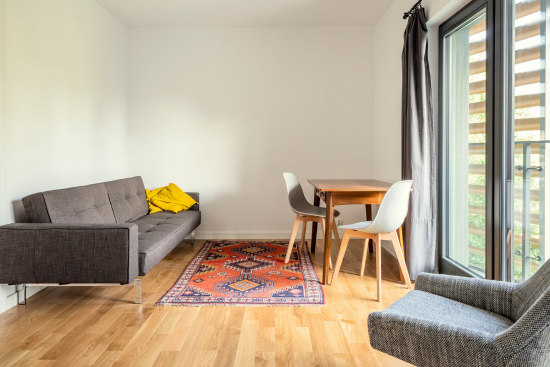
Living in a small apartment often feels like a balancing act between functionality and aesthetics. However, the most significant factor that determines whether a compact space feels like a “cozy sanctuary” or a “cramped cell” is natural light. Sunlight doesn’t just illuminate a room; it biologically improves our mood, regulates our circadian rhythms, and—crucially for interior design—visually expands the square footage.
When square footage is at a premium, you cannot afford dark corners. Shadows close in walls, while light pushes them out. This comprehensive guide explores every strategy, from architectural “cheats” to decor-focused illusions, to help you flood your small apartment with every possible lumen.
1. The Science of Reflective Surfaces
The first rule of light maximization is simple physics: light that hits a surface is either absorbed or reflected. In a small apartment, your goal is to minimize absorption.
-
Mirrors as “Windows”: A well-placed mirror is the oldest trick in the book for a reason. Placing a large mirror directly opposite a window reflects the view and the light back into the room, effectively doubling the brightness. For a modern look, consider a “gallery wall” of smaller mirrors or a floor-to-ceiling leaned mirror.
-
Glossy Finishes: Swap matte textures for high-gloss or semi-gloss finishes. This applies to kitchen cabinetry, coffee tables, and even floor stains. A polished concrete or light-colored hardwood with a satin finish acts as a giant reflector for sunlight hitting the floor.
-
Metallic Accents: Incorporating brass, chrome, or silver through lamps, picture frames, and furniture legs adds “sparkle points” that catch and throw light into darker nicks of the room.
2. Master the Color Palette: Beyond Basic White
While “paint it white” is the standard advice, not all whites are created equal, and white isn’t your only option.
-
Understanding LRV (Light Reflectance Value): When choosing paint, look at the LRV rating on the back of the swatch. It ranges from 0 (absolute black) to 100 (pure white). Aim for colors with an LRV of 60 or higher.
-
Cool vs. Warm Tones: If your apartment faces north, the light is bluish and weak. A “stark white” can look grey and depressing here. Instead, use a warm white with a hint of yellow or peach. If you face south, you have intense, warm light; cool whites or pale greys can help balance the heat.
-
The “Fifth Wall”: Never ignore the ceiling. Painting the ceiling a shade lighter than the walls (or a crisp, bright white) creates the illusion of height and prevents the “cave” feeling.
3. Minimalist Window Treatments
Many people sabotage their natural light by choosing heavy, bulky curtains that block the periphery of the window even when open.
-
Sheer Genius: Replace heavy drapes with sheer linen or voile. These provide privacy while diffusing sunlight, creating a soft glow that reaches deeper into the apartment.
-
The “Outside Mount” Trick: Install your curtain rod several inches above the window frame and make it wider than the window itself. This allows you to pull the curtains back completely so they rest against the wall, exposing 100% of the glass.
-
Roman Shades: If you prefer blinds, choose light-filtering Roman shades. They stack neatly at the top, leaving the bulk of the window clear during the day.
4. Strategic Furniture Placement
In a small space, bulky furniture acts as a dam, stopping the flow of light.
-
Low-Profile Pieces: Choose furniture that sits low to the ground. This keeps the sightline open and allows light to pass over the tops of sofas and beds to reach the inner walls.
-
Leggy Furniture: Furniture with exposed legs (Mid-Century Modern style) creates “negative space.” When you can see the floor extending under a sofa, the room feels lighter and more airy.
-
Transparent Materials: Acrylic or “ghost” chairs and glass-topped tables are invisible obstacles. They provide the utility of furniture without occupying any visual “weight” or blocking light.
5. De-Cluttering the Windowsill
We often treat windowsills as extra shelving for plants, books, or knick-knacks. However, even small objects on a windowsill cast long shadows that can significantly darken a room.
-
Clear the Path: Keep the immediate area around your windows clear. If you must have plants there, opt for thin-leaved varieties or glass terrariums rather than dense, leafy ferns.
-
Clean Your Windows: It sounds mundane, but a layer of city grime and dust can block up to 20% of incoming light. Cleaning both the interior and exterior glass twice a year makes a palpable difference.
6. Using “Translucent” Dividers
In a studio or small one-bedroom, you might want to define different zones (like a sleeping area vs. a living area) without building a solid wall that kills the light.
-
Glass Partitions: Crittall-style glass walls or simple sliding glass doors allow light to permeate the entire floor plan while providing a physical barrier.
-
Open Bookshelves: Use an open-backed shelving unit (like the IKEA Kallax) as a room divider. It holds your belongings while allowing light to filter through the gaps.
-
Slatted Wood Screens: Vertical wood slats provide a sense of separation and privacy but act like a permanent set of louvers that let sunlight dance through.
7. The Power of Greenery
While we mentioned not crowding the windowsill, plants can actually enhance the feeling of light if used correctly.
-
Light-Loving Varieties: Plants like Snake Plants or ZZ Plants can handle lower light, but if you have a sunny spot, use “lacy” plants like a Parlor Palm. The way sunlight filters through the leaves creates beautiful dappled shadows (komorebi), which adds depth and texture to a room.
-
Hanging Plants: Instead of cluttering the floor or tables, hang plants from the ceiling near windows. This keeps the floor plan open and draws the eye upward.
8. Artificial Light as a Supplement
Sometimes, natural light simply isn’t enough, especially on cloudy days or in apartments with only one orientation. The goal is to mimic the “feel” of natural light.
-
Layered Lighting: Avoid the “big light” (the single overhead fixture). Use a mix of floor lamps, table lamps, and LED strips.
-
Daylight Bulbs: Look for bulbs with a color temperature between 3500K and 4500K. This mimics the neutral white of a clear afternoon, avoiding the clinical blue of a hospital or the dingy yellow of old incandescent bulbs.
-
Up-Lighting: Place small “can” lights on the floor behind a sofa or a large plant, pointing upward. This bounces light off the ceiling and eliminates dark corners, making the room feel taller.
9. Architectural “Hacks” (If You Can)
If you own the apartment or have a flexible landlord, some minor structural changes can yield massive results.
-
Internal Windows: If you have a room with no windows (like a hallway or a small home office), consider installing an internal “transom” window above the door or a small window in the shared wall to borrow light from the adjacent room.
-
Replace Solid Doors: Swap solid interior doors for French doors or doors with frosted glass panels. This allows light to travel between rooms even when doors are closed for privacy.
10. The Psychological Impact of “Visual Breathability”
Maximizing light is as much about psychology as it is about physics. A cluttered room feels dark even if the sun is shining.
-
Minimalism: The fewer items you have, the fewer shadows are cast. Every object in a small apartment should “earn” its place.
-
Negative Space: Leave some walls bare. A blank, light-colored wall acts as a canvas for the changing light throughout the day, emphasizing the passage of time and the connection to the outdoors.
Conclusion
Maximizing natural light in a small apartment isn’t about one single change; it’s about the cumulative effect of many small choices. By combining reflective surfaces, a smart color palette, and “invisible” furniture, you can transform a dim, cramped space into a bright, breathable home. Remember: light is space. The more light you can invite in, the larger your world will feel.