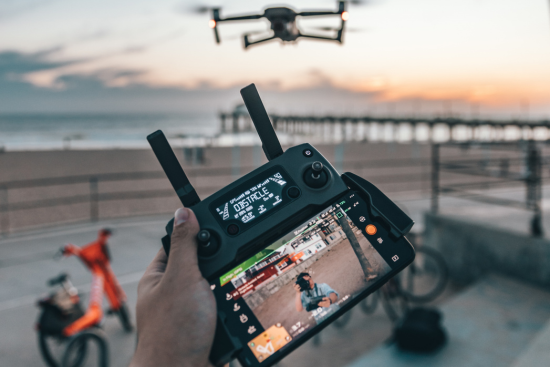
If you’ve ever watched a small aircraft hover silently over a beach, a construction site, or your neighbor’s backyard and wondered what exactly you were looking at, you’re not alone. It’s one of the most-searched tech questions of the decade, and the honest answer is more layered than most people expect. So, what is a drone in the simplest possible terms? At its core, it’s a flying machine that carries no pilot on board — every decision about where it goes is made either by a person on the ground or by onboard software. But that one-sentence definition barely scratches the surface of what these machines actually do, how they’re regulated, and why they’ve quietly become one of the most useful — and occasionally controversial — pieces of technology most people will ever own.
This guide walks through everything worth knowing: the technology itself, the different types on the market, how flying one actually works, the legal side (which varies more than you’d think from country to country), the genuine safety concerns, and practical advice on buying your first one without wasting money on the wrong model.
What Is a Drone, Exactly?
The technical term for a drone is UAV — Unmanned Aerial Vehicle — or, in more recent regulatory language, UAS, which stands for Unmanned Aircraft System. The “system” part matters: a drone isn’t just the flying object itself, it’s the whole package — the aircraft, the remote controller, the software that talks to both, and often a smartphone app that displays live video and flight data.
To understand what is a drone in engineering terms, it helps to break the aircraft down into its core parts:
- Frame — the body that holds everything together, usually carbon fiber or reinforced plastic to keep weight down.
- Motors and propellers — most consumer drones use four motors (a “quadcopter”), though six- and eight-rotor designs exist for heavier lifting.
- Flight controller — a small onboard computer, packed with gyroscopes and accelerometers, that keeps the aircraft stable dozens of times per second.
- Battery — almost always a lithium-polymer (LiPo) pack, the single biggest limiting factor on how long a drone can stay airborne.
- GPS module — lets the drone hold a fixed position, return to its takeoff point automatically, and follow pre-planned routes.
- Camera and gimbal — the gimbal is a motorized stabilizer that keeps footage smooth even when the aircraft tilts or shakes.
- Radio link — the two-way connection between the controller and the aircraft, carrying both your commands and the live video feed back to your screen.
None of this technology is new in isolation. What changed everything was miniaturization: by the early 2010s, smartphone-grade gyroscopes, cameras, and batteries had become cheap and small enough to stuff into a device that costs less than a laptop. That’s the real reason drones went from a military niche to a consumer product almost overnight.
A Quick History Nobody Tells You
Most people assume drones are a 21st-century invention, but the concept is over a century old. Here are a few facts that rarely make it into the average explainer:
- The first practical unmanned aircraft, the Ruston Proctor Aerial Target, was built by the British military in 1916 — a radio-controlled biplane designed to be flown into enemy airships.
- The word “drone” itself is widely believed to come from the DH.82B Queen Bee, a 1930s British target aircraft. Since a drone bee is the non-stinging male that serves the queen, the nickname stuck.
- For most of the 20th century, unmanned aircraft were almost exclusively military — reconnaissance and target practice, not photography.
- The first consumer quadcopter with a stabilized camera, the Parrot AR.Drone, only appeared in 2010, controlled entirely through a smartphone — a genuine novelty at the time.
- By 2015, the FAA was registering more new drone pilots in the United States than new manned-aircraft pilots, a crossover point that caught regulators off guard.
How Does a Drone Actually Stay in the Air?
The physics behind a quadcopter is simpler than it looks, but it’s worth understanding, because it explains almost every practical limitation drones have. A quadcopter has no rudder, no elevator, no traditional control surfaces at all — every single movement, from a gentle hover to a sharp turn, comes purely from varying the speed of its four motors relative to one another.
- To go up, all four motors spin faster, increasing total lift.
- To rotate, the drone speeds up the motors spinning one direction and slows the ones spinning the other — this is possible because two motors spin clockwise and two spin counter-clockwise, canceling out rotational torque when balanced.
- To move forward, backward, or sideways, the flight controller tilts the whole aircraft slightly by making the motors on one side spin faster than the other, redirecting a portion of the lift into horizontal thrust.
This is happening dozens to hundreds of times per second, constantly corrected by the gyroscope and accelerometer inside the flight controller. That’s also why a drone with a damaged motor or a bent propeller becomes almost uncontrollable instantly — the entire stability system depends on all four motors being able to respond predictably.
It’s also worth understanding why battery life is so limited compared to, say, a model airplane. Fixed-wing aircraft get most of their lift from air moving over a wing shape, which is remarkably efficient. A quadcopter gets 100% of its lift from brute motor power, fighting gravity directly the entire time it’s airborne — which is precisely why even a well-optimized consumer drone rarely breaks the 45-minute mark on a single charge, while a fixed-wing drone of similar weight can often fly for hours.
Types of Drones: Not All UAVs Are the Same
One of the most common mistakes is assuming every drone is basically the same toy with a camera bolted on. In reality, the category spans everything from a $30 palm-sized toy to a multi-million-dollar agricultural or military platform. The table below breaks down the main categories you’ll actually encounter.
| Type | Typical Weight | Main Use | Typical Price Range |
|---|---|---|---|
| Toy / mini drone | Under 250 g | Indoor play, first-time flying practice | $20 – $100 |
| Camera drone (consumer) | 250 g – 900 g | Photography, video, travel content | $300 – $1,600 |
| Prosumer / cinema drone | 900 g – 2 kg | Professional video, real estate, film | $1,600 – $4,000 |
| FPV (First-Person View) racing drone | 250 g – 1 kg | Racing, freestyle acrobatics | $200 – $1,000 |
| Fixed-wing drone | 1 kg – 25 kg | Mapping, surveying, long-range inspection | $2,000 – $25,000+ |
| Agricultural drone | 15 kg – 40 kg | Crop spraying, field monitoring | $8,000 – $30,000+ |
| Industrial / enterprise drone | Varies widely | Inspection, search and rescue, delivery trials | $5,000 – $100,000+ |
| Military UAV | Varies widely | Surveillance, combat support | Not publicly priced |
Notice how much of that table clusters around the 250-gram line. That number isn’t random — it’s the weight threshold that most aviation authorities use to decide whether a drone needs to be registered at all, which is a good bridge into the legal section further down.
What Is a Drone Used For? Real-World Applications
This is where the picture gets genuinely interesting, because the honest answer to “what is a drone used for” goes far beyond Instagram photos. Here’s a rundown of where these machines have quietly become essential tools:
Photography and filmmaking. The most visible use case — aerial shots that used to require a helicopter and a five-figure budget now cost a few hundred dollars and an afternoon of practice.
Agriculture. Farmers use multispectral camera drones to spot irrigation problems, crop disease, and nutrient deficiencies days or weeks before they’d be visible to the naked eye, and spraying drones now apply pesticide with far less waste than tractor-mounted systems.
Construction and surveying. Site managers fly weekly mapping missions to track progress, measure stockpiles, and generate 3D models — work that used to take a survey crew days now takes a drone about twenty minutes.
Search and rescue. Thermal-camera drones can scan a wide search area for a missing hiker’s body heat far faster than a ground team on foot, and several documented rescues have happened specifically because a thermal drone spotted someone a search party had walked right past.
Infrastructure inspection. Power lines, cell towers, wind turbines, and bridges are increasingly inspected by drone instead of sending a technician up on a harness — safer and considerably cheaper.
Journalism and real estate. A property listing with an aerial establishing shot consistently performs better, and news outlets now routinely use drone footage for coverage of wildfires, floods, and protests where sending a helicopter isn’t practical.
Delivery and logistics. Still early-stage in most countries, but companies including Amazon, Wing (Alphabet), and Zipline are running live delivery operations in select cities, dropping everything from prescription medication to takeout food.
Environmental research. Scientists use drones to track wildlife populations, monitor glacier melt, and map deforestation without disturbing the habitat the way a ground team would.
Racing and freestyle flying. FPV drones, flown while wearing video goggles that put you “inside” the aircraft, have grown into a genuine competitive sport, with leagues and prize pools that didn’t exist a decade ago.
How to Use a Drone: The Basics
Learning to fly is genuinely more approachable than it sounds, but there’s a real skill curve, and the biggest early mistake people make is buying a serious camera drone as their very first aircraft. Here’s a realistic path:
- Start in GPS mode, in an open field, on a calm day. Wind is the number-one reason first flights go badly — even a light breeze can push a cheap drone off course fast enough to panic a new pilot.
- Learn the four basic stick movements first: throttle (up/down), yaw (rotate left/right), pitch (forward/back), and roll (left/right strafe). Practicing these individually, rather than all at once, builds muscle memory much faster.
- Use “Return to Home” as a safety net, not a crutch. Every GPS drone worth buying has a one-button return function — know how to trigger it before you ever need it in a panic.
- Respect the battery. LiPo batteries lose a large chunk of their remaining capacity in the last few minutes of flight faster than the percentage readout suggests. Land at 20-25%, not when the low-battery alarm is already screaming.
- Practice manual landings before you rely on automatic ones. Auto-land is convenient, but a hand-landing skill saves the aircraft when the sensors get confused by uneven ground or long grass.
- Fly with the sun behind you, not the drone. A quick tip almost nobody mentions upfront: staring into the sun while trying to track a small aircraft is how a surprising number of beginner drones end up in trees.
Do You Need a License to Fly a Drone?
This is probably the single most-searched practical question, and the honest answer is: it depends — on your drone’s weight, what you’re using it for, and which country you’re in. Broadly, almost every serious aviation authority draws the same line: fly for fun and you generally face lighter requirements; fly for any kind of payment or business purpose and the rules tighten considerably.
United States
Recreational flyers must pass the free, online TRUST test (The Recreational UAS Safety Test) and follow the FAA’s community-based safety guidelines, but they do not need a full pilot certificate. Anyone flying for compensation — real estate photography, inspections, mapping, even monetized YouTube content in some interpretations — needs a Part 107 Remote Pilot Certificate, earned by passing a 60-question knowledge exam covering airspace, weather, and regulations. Drones over 250 g must be registered with the FAA regardless of purpose, and most drones now need to broadcast Remote ID, a kind of digital license plate that identifies the aircraft to other airspace users.
European Union
The EU runs one shared rulebook through EASA (the European Union Aviation Safety Agency), applied across all member states plus Iceland, Norway, and Liechtenstein. Operations are sorted by risk into three categories:
- Open category — covers roughly 90% of all flights, recreational and light commercial alike, and needs no formal authorization.
- Specific category — for higher-risk operations like flying beyond visual line of sight or with heavier drones; requires authorization from the national aviation authority.
- Certified category — treated essentially like manned aviation, for large drones carrying goods or passengers.
Inside the Open category, pilots fall into subcategories A1 (flying over individual bystanders, allowed with the lightest drones), A2 (flying close to people, requires an extra competency certificate), and A3 (flying far from people, the default for most beginners). Nearly every EU pilot flying a drone over 250 g needs to pass the free A1/A3 online exam before their first flight.
United Kingdom
Post-Brexit, the UK runs its own system through the Civil Aviation Authority, structurally similar to the EU’s but administered separately. Pilots need a Flyer ID (a short online safety test) and, for drones over 250 g, an Operator ID, renewed annually for a small fee.
Poland and Neighboring Markets
Poland follows the EU/EASA framework described above, administered locally through the ULC (Urząd Lotnictwa Cywilnego). Germany, the Netherlands, Italy, France, and Sweden all apply the same EASA categories, though enforcement intensity and the availability of local flying zones vary noticeably between countries.
Australia and Canada
Australia’s CASA and Canada’s Transport Canada both use weight- and risk-based tiers broadly similar to the US and EU models — light recreational flying with minimal paperwork, and a formal certificate required once commercial use or heavier aircraft enter the picture.
The practical takeaway: almost nowhere in the developed world can you legally fly a drone over roughly 250 grams completely rule-free. Registration, a basic safety test, or both are close to universal now — the days of buying a drone and flying it with zero paperwork are largely over, even for casual hobbyists.
Can a Drone Cause Harm?
Yes — and pretending otherwise would be dishonest. The risks fall into a few distinct categories, and understanding them is part of using one responsibly.
Physical injury. Spinning propellers can cause real lacerations, and a drone falling from altitude carries genuine impact force. Most documented injuries involve the pilot or bystanders during takeoff and landing, not mid-flight collisions — which is exactly why keeping people clear of the launch area matters more than most beginners assume.
Aviation safety. A drone colliding with a manned aircraft is a serious, sometimes catastrophic risk — this is the core reason altitude limits (typically 120 meters/400 feet) and no-fly zones around airports exist almost everywhere in the world.
Privacy. A camera-equipped drone hovering over a backyard raises legitimate privacy concerns, and several countries now treat unauthorized surveillance by drone as a distinct legal issue, separate from the flight rules themselves.
Wildlife disturbance. Low-flying drones can stress nesting birds and other wildlife enough to cause them to abandon nests or young — a growing concern for conservation authorities in sensitive habitats.
Wildfire interference. In several well-documented cases, hobbyist drones flown near active wildfires have forced firefighting aircraft to ground themselves entirely, since low-flying manned aircraft cannot safely share airspace with an unpredictable drone.
None of this means drones are inherently dangerous when used sensibly — the injury and incident rate, statistically, is low relative to the number of flights happening daily worldwide. But every one of these risks is exactly why the licensing and registration systems above exist, and why “it’s just a toy” is no longer a defensible attitude once a drone leaves the box.
Which Drone Should You Start With?
If you’re buying your first one, resist the temptation to go straight for the most feature-packed model in your budget. A few practical guidelines:
- Under 250 g is genuinely the smartest starting weight class in most countries, since it sidesteps a chunk of registration and licensing requirements while still offering a real camera and GPS stabilization on mid-range models.
- Buy from a brand with a real support ecosystem. DJI dominates the consumer space for a reason — spare parts, firmware updates, and community troubleshooting are far easier to find than for obscure budget brands.
- Obstacle avoidance sensors are worth paying for, even on a first drone — they meaningfully reduce the odds of an expensive early crash.
- Skip FPV racing drones as a first purchase unless racing itself is the goal; they’re intentionally twitchy and unforgiving, built for pilots who already understand the basics.
- Buy at least one spare battery. Stock flight times on consumer drones typically run 20-30 minutes, which disappears fast once you’re actually filming something.
How to Learn to Fly a Drone
Nobody is a natural on their first flight, and that’s completely normal. A realistic learning path looks like this:
- Read the manual for your specific model. It sounds obvious, but flight modes, sensor limitations, and firmware quirks differ enough between brands that generic YouTube advice only goes so far.
- Use a flight simulator first, if one is available for your drone — several manufacturers offer free simulator apps that let you crash (virtually) without cost.
- Take the free regulatory course for your country (TRUST in the US, the A1/A3 exam in the EU, the Flyer ID test in the UK) — these aren’t just legal requirements, they genuinely teach airspace and safety basics worth knowing regardless of the law.
- Join a local club or online community. Most regions have active hobbyist groups, and experienced pilots are usually happy to walk a beginner through their first real-world flights.
- Practice hovering before anything else. Holding a stable position in one spot, in light wind, is the single skill that everything else builds on.
- Film something boring before you film something important. Test your camera settings and flight plan on a low-stakes subject before you attempt the wedding, the client shoot, or the once-in-a-lifetime landscape.
What Does a Drone Cost? A Realistic Price Breakdown
Prices vary enormously depending on category, and this is one of the most common points of confusion for first-time buyers. Here’s a general sense of what to expect at each tier, based on typical market pricing:
| Budget | What You’ll Realistically Get |
|---|---|
| Under $100 | Toy-grade mini drone, no GPS, short flight time, indoor/light-wind use only |
| $100 – $400 | Entry camera drone, basic GPS hold, decent stabilization, good for learning |
| $400 – $1,000 | Solid mid-range camera drone, 4K video, obstacle avoidance, 25-30 min flight time |
| $1,000 – $2,500 | Prosumer-grade, larger sensor, advanced tracking, professional-quality footage |
| $2,500 – $6,000 | Cinema-grade or specialized mapping/surveying drones |
| $6,000+ | Enterprise, agricultural, or industrial-grade platforms |
Beyond the drone itself, budget for extra batteries, propeller guards, a proper carrying case, and — depending on your country — registration or licensing fees, which are usually modest but easy to forget about when calculating the real first-year cost.
Where Drone Technology Is Headed Next
A few trends worth watching, since they’ll likely shape what “a drone” even means within the next few years:
- Autonomous delivery is scaling up. What started as small pilot programs in a handful of cities has moved into genuine daily operations in parts of the US, Australia, and Africa, with delivery times for small packages now measured in minutes rather than hours.
- BVLOS (Beyond Visual Line of Sight) rules are loosening. Historically, most countries required a pilot to keep the drone within eyesight at all times. Regulators including the FAA are actively developing frameworks — Part 108 in the US, for instance — to allow routine long-distance flights without that restriction, which would unlock far larger commercial use cases.
- AI-assisted flight is becoming standard, not a luxury feature. Automatic subject tracking, obstacle avoidance, and even fully autonomous inspection routes that require zero manual piloting are moving from premium enterprise drones into mid-range consumer models.
- Counter-drone technology is growing just as fast. As drones become more common near airports, prisons, stadiums, and government buildings, so has the market for detecting and neutralizing unauthorized ones — a direct response to the safety and security concerns covered earlier.
- Urban Air Mobility research is edging closer to reality. Larger, passenger-carrying drones — essentially autonomous air taxis — are in active testing in several countries, though widespread commercial passenger service is still likely years away.
What’s Worth Knowing Before You Buy
A short list of things that rarely make it into flashy marketing copy:
- Battery degradation is real. LiPo batteries lose capacity over charge cycles and age faster in hot storage — don’t leave them fully charged in a hot car.
- No-fly zones are built into most drones’ firmware. Many consumer models simply won’t take off near airports or other restricted areas, regardless of what the local law technically allows.
- Wind resistance ratings matter more than headline specs. A drone that looks impressive on paper can still get pushed around badly in moderate wind if it’s lightweight.
- Insurance exists, and for anyone doing commercial work, liability coverage is worth far more than its modest cost given the potential damage a crash can cause.
- Firmware updates change behavior. A drone’s flight characteristics, geofencing, and even legal compliance features can shift meaningfully after an update — always read release notes before flying a freshly updated aircraft.
Frequently Asked Questions
What Is a Drone in One Sentence?
A drone is an aircraft that flies without a pilot physically on board, controlled remotely by a person or guided automatically by onboard software and GPS.
What Is a Drone Used for the Most?
Photography and videography remain the most common consumer use worldwide, though agriculture, construction surveying, and infrastructure inspection now account for a fast-growing share of total flight hours globally.
Do I Really Need a License to Fly One?
It depends on the drone’s weight and whether you’re flying for fun or for money. Most countries require at least a free safety test for drones over roughly 250 grams, and a full commercial certificate for any paid work.
What Is a Drone Swarm?
A drone swarm is a group of multiple UAVs flying in coordinated formation, either pre-programmed or communicating with each other in real time — used for light shows, military demonstrations, and increasingly for agricultural and mapping work covering large areas quickly.
How Long Can a Drone Stay in the Air?
Most consumer drones fly for 20-40 minutes per battery, while larger fixed-wing or industrial models can stay airborne for several hours, and specialized long-endurance military UAVs have flown continuously for over 24 hours.
Can a Drone Fly in the Rain?
Most consumer drones are not water-resistant and shouldn’t be flown in rain, since moisture can damage the motors and electronics — a small number of higher-end models carry an official IP rating for light rain resistance.
What Is a Drone Pilot Actually Responsible For?
Beyond just steering, a responsible pilot checks local airspace restrictions before every flight, keeps the aircraft within visual line of sight, respects people’s privacy, and carries proof of registration or certification where required by law.
Is Flying a Drone Considered a Hobby or a Sport?
Both, depending on how it’s practiced. Casual recreational flying and aerial photography are treated as a hobby almost everywhere, while FPV racing and freestyle flying have developed into a recognized competitive sport with organized leagues.
Whatever brought you here — curiosity, a first purchase, or research for a specific project — hopefully this answers the question properly. Now that you know what is a drone at every level, from the parts inside it to the paperwork around it, the next step is simple: start small, learn the basics in an open field, and build up from there.