

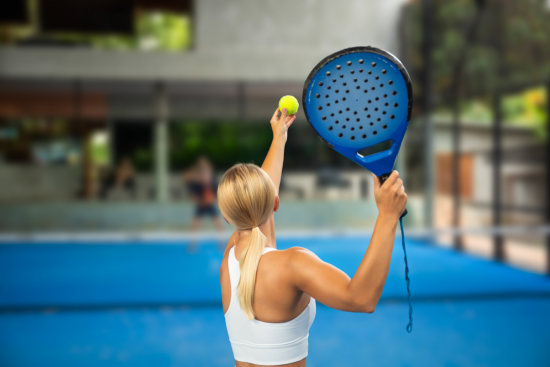
If you’ve walked past a glass-walled court packed with laughing, sweating players and wondered “what is padel, exactly?” — you’re not alone. A few years ago almost nobody outside Spain or Argentina could have answered that question. Today, padel is one of the fastest-expanding sports on the planet, and new clubs seem to open faster than most cities can build parking spaces for them.
This guide answers the question properly. We’ll cover what padel actually is, how the game is played, how to get started as a total beginner, where it’s played around the world, how it compares to tennis and pickleball, why it exploded in popularity, what it does for your body, and who might want to think twice before stepping onto the court. Along the way you’ll find a comparison table, a rules cheat-sheet, and twenty facts that even regular players usually don’t know.
What Is Padel? A Quick Definition
Padel (pronounced “PAH-del,” never “paddle,” even though the confusion is constant) is a racket sport that blends elements of tennis and squash. It’s played in doubles on an enclosed court roughly a third the size of a tennis court, using solid, stringless bats and a low-compression ball similar to a tennis ball but softer.
The single feature that defines padel more than any other is the glass and mesh fencing that surrounds the court. Unlike tennis, the ball is allowed to bounce off these walls after it lands in the opponent’s court, which turns every rally into a mix of strategy, angles, and reflexes rather than pure power. That’s really the short version of what padel is: a fast, social, tactical doubles game played inside a walled-in court, where smart positioning usually beats a hard smash.
Here’s a quick-reference snapshot before we go deeper:
| Feature | Padel at a Glance |
|---|---|
| Players | Almost always doubles (2 vs 2) |
| Court size | About 20m x 10m (roughly a third of a tennis court) |
| Court surroundings | Glass and metal mesh walls the ball can bounce off |
| Racket | Solid, stringless bat with holes, no strings |
| Ball | Similar to a tennis ball, lower pressure/bounce |
| Serve | Underarm only, hit below waist height |
| Scoring | Same as tennis: 15, 30, 40, game, set, match |
| Origin | Invented in Mexico in 1969, popularized in Spain |
| Difficulty for beginners | Low — most people rally within minutes |
The Origins and History of Padel
Understanding what padel is also means understanding where it came from, because the sport’s backstory explains a lot about how it’s played today, and it’s part of what makes padel such a good story to tell newcomers.
Padel was invented in 1969 by a Mexican businessman named Enrique Corcuera, who built a modified squash court at his home in Acapulco because he didn’t have enough space for a full tennis court. He added walls so the ball wouldn’t fly out of the yard, and a new sport was essentially born by accident. A few years later, his friend Alfonso de Hohenlohe, a Spanish aristocrat, brought the idea back to Marbella, Spain, and built the country’s first padel courts at his Marbella Club Hotel in 1974.
From there, padel spread through southern Spain and Argentina during the 1970s and 1980s, largely as a social club sport. It stayed relatively under the radar internationally for decades — a well-kept secret enjoyed mostly by Spaniards and Latin Americans — until roughly 2015 onward, when clubs began appearing across Sweden, Italy, France, the UK, the Middle East, and beyond. What was once a regional pastime has become one of the world’s fastest-growing team sports, and the growth curve is still climbing sharply.
Quick fact: Spain remains the undisputed heartland of the sport, with well over six million players and more than 17,000 courts nationwide — more courts than the rest of Europe combined. Padel is now widely considered the second most popular participation sport in Spain, trailing only football.
How to Play Padel: Rules and Basics
So, how do you actually play padel once you’re on the court? The rules borrow heavily from tennis, which is part of why so many tennis players pick it up so quickly, but there are a handful of quirks that make padel its own game.
Scoring: Padel uses exactly the same scoring system as tennis — 15, 30, 40, game — with sets typically played to six games (win by two), and matches usually decided over the best of three sets. If you already understand tennis scoring, you already understand padel scoring.
The serve: This is one of the biggest differences from tennis. Every serve in padel must be hit underarm, and the ball must bounce once on the ground before contact, then be struck below waist height. Serves are hit diagonally into the opponent’s service box, just like in tennis, and the server gets one attempt per point rather than two — although some recreational leagues allow a second serve for beginners.
The walls: Once the ball has bounced on your side of the court, you’re allowed to let it bounce off the back or side glass walls before returning it, as long as it touched the ground first inside the court. You cannot volley the ball off the wall before it bounces on the ground — the ball has to hit the floor first. This single rule is what gives padel its distinctive rhythm: long, strategic rallies where players use the walls to set up angled winners rather than simply overpowering the ball.
Faults and out-of-play areas: If the ball hits the fencing directly (without bouncing on the ground first) or flies out of the enclosed area entirely, the point goes to the opposing team. There are designated “doors” in the fencing that let players retrieve stray balls, but any ball leaving the playing area before bouncing twice typically ends the point.
Positioning: Because the court is small and enclosed, padel rewards teamwork and communication far more than raw athleticism. Most points are won by controlling the net, using soft “bandeja” and “vibora” shots (overhead touches that keep the ball low and awkward for opponents), and forcing mistakes through smart wall play rather than blasting winners.
A simplified rules cheat-sheet:
- Always doubles — 2 players per side.
- Underarm serve only, ball must bounce first, hit below waist.
- Ball can bounce off your own side’s walls before you return it.
- Ball must bounce on the ground before touching a wall — never wall-first.
- Scoring matches tennis: 15-30-40-game.
- Standard match: best of three sets, first to six games (win by two).
- Ball landing outside the court boundary or hitting the fence directly = point lost.
Once you understand the serve, the walls, and the scoring, you’ve basically answered “what is padel” for yourself — the rest is just practice.
Padel Court and Equipment
If you’re picturing a tennis court, resize it: a padel court measures about 20 meters long by 10 meters wide, enclosed on all sides by glass panels (usually at the back and part of the sides) and metal mesh fencing (typically along the upper portions and sidelines). A net divides the court in half, slightly lower than a tennis net.
The racket, often just called a “bat” or “pala,” is solid rather than strung, usually made from a fiberglass or carbon-fiber face over a foam core, with holes drilled through the face to reduce air resistance. There are no strings to snap and, generally speaking, far less racket-related maintenance than tennis.
The ball looks almost identical to a tennis ball but is pressurized slightly lower, producing a gentler bounce that’s kinder to beginners and easier on the joints during long rallies.
How Do I Get Started Playing Padel?
This is usually the second question people ask right after “what is padel,” and thankfully, the answer is refreshingly simple. Padel has one of the lowest barriers to entry of any racket sport, which is a huge part of why it’s spreading so fast.
Step 1: Find a club or facility near you. Most cities with any padel scene have at least one dedicated club, and many tennis clubs have converted a court or two into padel courts to meet demand. Booking apps used by clubs worldwide make it easy to check availability and reserve a slot, often by the hour.
Step 2: Rent equipment before buying anything. Almost every padel club rents rackets and balls for a small fee, so there’s no need to invest in gear before you know whether you enjoy it. Wear regular sports shoes with non-marking soles (ideally proper padel or tennis trainers with good lateral support) and comfortable athletic clothing.
Step 3: Book an introductory lesson or “taster” session. Many clubs run one-off beginner classes that cover the serve, basic wall play, and positioning in under an hour. Because the court is smaller and the ball moves slower than a tennis ball, most complete beginners are sustaining rallies within their very first session — something that rarely happens on a first attempt at tennis.
Step 4: Play doubles with people at your level. Padel is inherently social; it’s almost never played solo or even as singles. Look for “mixed level” or beginner social sessions, which most clubs run weekly, to meet other new players and build up match experience without the pressure of playing against advanced opponents.
Step 5: Learn the wall before you learn the smash. New players are often tempted to copy the powerful smashes they see professionals hit, but the fastest way to actually improve is learning how to read the ball off the back and side walls. Controlled, low returns beat wild power almost every time in padel, especially at beginner and intermediate level.
Step 6: Invest in your own racket once you’re hooked. After a handful of sessions, most players know whether padel is for them. Entry-level rackets are inexpensive compared to premium tennis or squash rackets, and a decent beginner bat costs roughly the same as a mid-range pair of running shoes.
Where Is Padel Played?
Part of answering “what is padel” honestly means acknowledging that where you live still affects how easy it is to try, though availability has changed fast and keeps shifting almost every season. Padel’s geography tells its own story: it began in Mexico, took root in Argentina, and became a genuine national obsession in Spain — but the map has changed dramatically over the last decade.
Spain remains the epicenter, packed with courts in nearly every town of any size. Argentina and other Latin American countries such as Mexico maintain deep grassroots padel cultures dating back decades. From there, the sport has spread rapidly across:
- Southern and Western Europe — Italy, France, Portugal, and Sweden all now have thriving padel scenes, with Sweden in particular seeing padel participation overtake tennis participation in recent years.
- The Middle East — Saudi Arabia and the United Arab Emirates have invested heavily in padel infrastructure as part of broader sports and tourism strategies, building large numbers of premium courts in a short span of time.
- The United Kingdom — one of Europe’s fastest-growing padel markets, with courts appearing at converted tennis clubs, leisure centers, and dedicated padel venues in most major cities.
- The United States — still an early-stage but rapidly growing market. Participation jumped from under 100,000 players in 2023 to roughly half a million by the end of 2025, even though the number of courts remains relatively small compared to demand, partly due to zoning and noise-related planning restrictions on glass-walled courts.
- Asia-Pacific — China, Japan, and several other markets are seeing early but fast-growing investment from padel equipment brands and club operators betting on long-term growth.
According to the most recent Global Padel Report compiled by Playtomic and PwC Strategy&, there are now more than 58,000 padel courts spread across nearly 20,000 clubs worldwide, with global participation estimated at close to 20 million regular players — and other federation-based estimates put the true figure closer to 30 million once occasional and recreational players are included. Whichever number you trust, the trend line points the same direction: sharply upward.
Padel vs Tennis vs Pickleball: What’s the Difference?
A big part of explaining what is padel to a total newcomer is placing it next to the two sports people already know. Because padel looks like a cousin of both tennis and pickleball, this is one of the most common points of confusion. Here’s a side-by-side breakdown.
| Padel | Tennis | Pickleball | |
|---|---|---|---|
| Court size | ~20m x 10m, enclosed | ~24m x 11m (doubles), open | ~13.4m x 6.1m, open |
| Racket/paddle | Solid, stringless bat | Strung racket | Solid paddle, smaller than padel bat |
| Walls in play | Yes, ball can bounce off | No | No |
| Serve style | Underarm only | Overhead or underarm | Underarm only |
| Typical format | Doubles only | Singles or doubles | Singles or doubles |
| Ball | Tennis-like, lower pressure | Standard tennis ball | Perforated plastic ball |
| Physical intensity | Moderate-high, short sprints | High, more running | Lower-moderate |
| Learning curve | Gentle | Steep | Very gentle |
The practical differences matter more than the technical ones. Tennis rewards raw power, serve speed, and covering a large open court, which makes it a demanding sport to pick up as an adult beginner. Pickleball is played on a much smaller court with a lighter paddle and a slower ball, making it extremely approachable but generally less physically intense. Padel sits neatly in the middle: the enclosed walls keep points alive longer and reward tactics over brute force, the court is small enough that fitness isn’t a prerequisite to start, and doubles play makes it inherently social — which is exactly why so many people who found tennis intimidating and pickleball a little too gentle have landed on padel as their sport of choice.
Why Has Padel Become So Popular?
Anyone researching what padel is today will notice the same pattern repeating in city after city: a handful of courts opens, waiting lists form within weeks, and more courts follow. There isn’t one single reason padel took off — it’s really a combination of factors landing at the same time.
It’s genuinely easy to start. Because the court is smaller and the ball is softer than a tennis ball, new players can sustain rallies almost immediately, which makes that crucial first session far more enjoyable than a beginner’s first tennis lesson usually is.
It’s social by design. Padel is essentially always played as doubles, which naturally turns a workout into a social occasion — a huge draw for people who found solo training or singles sports isolating.
It suits a wide range of ages and fitness levels. Because the court is compact and points rely more on positioning and wall-reading than sprinting, players in their 40s, 50s, and beyond can compete meaningfully against — and sometimes beat — much younger opponents.
Investment and celebrity attention accelerated the trend. Major sports brands and high-profile athletes and celebrities have poured money and public interest into padel over the past several years, building professional tours, sponsoring clubs, and raising the sport’s visibility well beyond its Spanish and Argentine roots.
Clubs are quick and relatively affordable to build. Compared to a full tennis complex, padel courts take up less space and can be installed faster, which has allowed operators to expand supply quickly in cities hungry for new places to play.
It photographs and streams well. The enclosed glass court creates a natural, spectator-friendly viewing experience, both live and on video, which has helped padel content spread widely on social media — often introducing the sport to people who had never heard the word before.
Health Benefits of Playing Padel
Once the “what is padel” question is settled, the next one people usually ask is what it actually does for their body. Beyond the social appeal, padel delivers a genuinely well-rounded workout, and this is a major reason doctors and fitness coaches increasingly recommend it.
- Cardiovascular fitness: Matches involve repeated short sprints, direction changes, and sustained rallies, which elevate heart rate similarly to interval training.
- Full-body engagement: Padel works the legs, core, shoulders, and forearms through constant lunging, rotating, and striking.
- Improved coordination and reflexes: Reading the ball off walls at speed sharpens hand-eye coordination and reaction time more than many open-court sports.
- Lower joint impact than tennis: The smaller court means less overall running distance, and the softer ball reduces some of the repetitive strain associated with tennis, making it a gentler option for people returning to sport after time off.
- Mental engagement: Because tactics and positioning matter as much as athleticism, padel keeps players mentally involved in a way that purely repetitive cardio exercise often doesn’t.
- Social and mental wellbeing: The doubles format and club culture around padel provide a strong social component, which research on exercise adherence consistently links to people sticking with a sport long-term rather than abandoning it after a few weeks.
A typical hour-long recreational padel session can burn a comparable number of calories to a moderate-intensity tennis or squash session, while placing noticeably less strain on the body — one of the reasons the sport appeals to such a broad age range.
Is Padel Risky? Injuries and Who Should Be Cautious
No sport is entirely risk-free, and padel is no exception, even though it’s often described as gentler than tennis or squash.
The most common padel injuries involve the lower body and shoulder, largely because of the sport’s constant lunging, quick direction changes, and repeated overhead shots. Ankle sprains from sudden stops and lateral movement are among the most frequently reported injuries, followed by knee strain, tennis-elbow-style forearm overuse, and shoulder issues from repeated smashes and overhead volleys. Lower back strain can also occur, particularly among beginners who twist awkwardly while reaching for wall rebounds before they’ve developed proper technique.
Certain groups should be more cautious or check with a doctor before diving in:
- People with existing knee, ankle, or hip joint problems, since the sport involves frequent pivoting and sudden stops.
- Anyone recovering from shoulder injuries or rotator cuff issues, due to the repetitive overhead motion involved in smashes and volleys.
- People with uncontrolled cardiovascular conditions, given the bursts of high-intensity movement typical of competitive rallies.
- Complete beginners with no recent physical activity, who are generally advised to start with lighter sessions, proper warm-ups, and supportive footwear rather than jumping straight into competitive matches.
That said, for most healthy adults, padel is considered lower-impact and more joint-friendly than tennis or squash, largely because rallies happen on a smaller court with a softer ball. A sensible warm-up, well-fitted court shoes with good lateral support, and a gradual build-up in intensity go a long way toward avoiding the most common injuries — advice that applies to virtually every racket sport, not just padel.
20 Interesting Facts About Padel
- Padel was invented by accident in 1969, when a Mexican businessman built walls around a squash-sized court because he lacked space for a full tennis court.
- The sport’s name has nothing to do with paddling — it comes from “pádel,” the term used from the very first courts built in Mexico and Spain.
- Padel is almost always played in doubles; singles padel exists but is rare and not part of the sport’s official competitive structure.
- Spain has more padel courts than the rest of Europe combined, with well over 17,000 courts nationwide.
- Padel is now considered the second most popular participation sport in Spain, behind only football.
- Sweden’s registered padel players overtook its registered tennis players earlier this decade — a striking sign of how fast adoption has moved in some markets.
- There are now more than 58,000 padel courts worldwide, with new courts opening at a pace of thousands per year.
- Global padel participation is estimated at somewhere between 19 and 35 million players, depending on the methodology used.
- Padel rackets have no strings at all — they’re solid, perforated bats made from composite materials like fiberglass or carbon fiber.
- The ball used in padel looks almost identical to a tennis ball but has lower internal pressure for a gentler bounce.
- Every serve in padel must be underarm and hit below waist height — overhead serving isn’t allowed under any circumstances.
- The ball is allowed to bounce off the walls after touching the ground, which is the single rule that most defines padel’s style of play.
- Padel courts are enclosed by a mix of glass panels and metal mesh fencing, giving the sport its distinctive, spectator-friendly look.
- Several major global sports brands have launched dedicated padel equipment lines in recent years to meet surging demand.
- High-profile athletes from football, tennis, and other sports have publicly invested in or promoted padel clubs and tournaments.
- The United States remains an early-stage padel market, with player numbers growing far faster than court availability.
- Zoning and noise regulations around glass-walled courts have slowed padel’s expansion in several cities, particularly in North America.
- Padel’s compact court size makes it one of the fastest sports to build a new facility for compared to tennis or squash.
- Padel scoring is identical to tennis scoring, which is one reason so many former or current tennis players switch to it easily.
- Because it rewards positioning and wall-reading over raw power, padel is one of the few racket sports where a well-drilled beginner pairing can occasionally trouble more athletic but less tactical opponents.
If there’s one message worth repeating throughout this guide, it’s that what padel offers isn’t just a new sport — it’s a genuinely different, more social way to stay fit that happens to be easy to pick up at almost any age.
Frequently Asked Questions About Padel
What is padel in simple terms?
Padel is a doubles racket sport played on a small, enclosed court where the ball can bounce off the surrounding glass and mesh walls before being returned, combining elements of tennis and squash into one fast, social game.
Is padel easier than tennis?
For most beginners, yes. The smaller court, softer ball, and underarm-only serve make padel far more approachable for a first-time player than tennis, where serving technique and covering a larger open court take much longer to master.
Do I need to be fit to start playing padel?
No. Because points happen within a smaller, enclosed space, padel is accessible to a wide range of fitness levels, and many clubs run beginner sessions specifically designed to ease new players in gradually.
What equipment do I need to try padel for the first time?
Just comfortable athletic clothing and court shoes with good lateral support — rackets and balls are almost always available to rent at padel clubs, so there’s no need to buy equipment before your first session.
How many players are needed for a game of padel?
Padel is played four players at a time, two per side, in a doubles format. Singles padel exists informally but isn’t the standard way the sport is played or organized competitively.
Is padel more like tennis or squash?
It’s genuinely a blend of both: the scoring system and general shot-making come from tennis, while the enclosed court and use of walls in play borrow directly from squash.
Can padel cause injuries?
Like any racket sport, padel carries some injury risk, most commonly ankle sprains, knee strain, and shoulder overuse from repeated smashes — though it’s generally considered gentler on the body than tennis or squash thanks to its smaller court and softer ball.
Where did padel originate?
Padel was invented in Acapulco, Mexico, in 1969, then popularized in Marbella, Spain, in the mid-1970s, before eventually spreading across Europe, the Middle East, and beyond.
Whichever angle brought you here, the short answer to “what is padel” is this: it’s a smart, sociable, surprisingly easy-to-learn racket sport that’s reshaping how people think about staying active together. Given how quickly courts are being built and how many new players pick up a bat every month, there’s a good chance a padel club isn’t far from you — and an even better chance you’ll be hooked after a single session.