

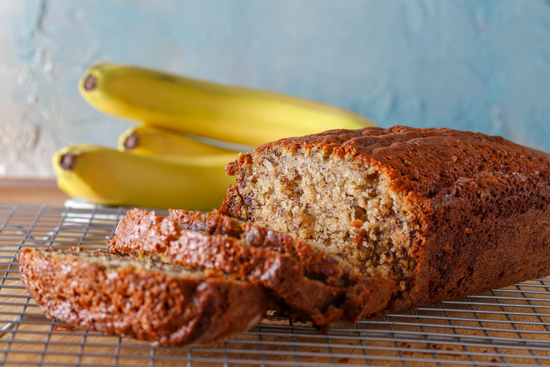
There’s a good chance you’ve searched for this while a loaf was already in the oven, the kitchen smelling like cinnamon and caramelized fruit, and a stray thought crossed your mind: who actually came up with this? It’s a fair question. Banana bread feels timeless, like something your grandmother’s grandmother must have baked, yet the real story is younger, stranger, and more interesting than most people expect. So, where does banana bread come from? The honest answer involves a stock market crash, a fruit that almost didn’t survive the trip to America, and a marketing push from flour companies that needed people to keep baking during hard times.
This article walks through the full story — the origin, how it spread across the world, whether it deserves its “comfort food” reputation from a nutrition standpoint, and three recipes you can actually make tonight, including a gluten-free version. No filler, just the things people usually want to know when they type “where does banana bread come from” into a search bar at 9 p.m. with flour still on their hands.
Where Does Banana Bread Come From? The Short Answer
If you only have thirty seconds: banana bread comes from the United States, and it first showed up in home kitchens and cookbooks during the early 1930s, right in the middle of the Great Depression. It wasn’t invented by one famous baker or one specific person we can name. Instead, it developed gradually, as households looked for ways to avoid wasting overripe bananas at the exact moment that baking soda and baking powder — the ingredients that make a bread rise without yeast — became cheap and widely available.
So when people ask where does banana bread come from, the most accurate description isn’t “a single inventor” but “a perfect overlap of circumstances”: a fruit that had only recently become affordable, a national mood of thriftiness, and new baking technology that made quick breads possible for the first time. Put those three things together and banana bread was almost inevitable.
The Real History of Banana Bread
To really understand where does banana bread come from, you have to start earlier than the 1930s — with the banana itself.
Bananas Take a While to Reach America
Bananas are not native to North America. They originated in Southeast Asia and were carried across trade routes for centuries before reaching the Americas, largely through Portuguese and Spanish traders in the 1500s and 1600s. But for most of the 1800s, bananas remained a rare, almost exotic treat in the United States — fragile, quick to spoil, and expensive to ship from the tropics.
That changed around the turn of the 20th century, when steamship refrigeration improved enough that companies could transport bananas in bulk without the whole shipment rotting on the way. Suddenly, a fruit that used to be a novelty at fairs and expositions became something an ordinary family could buy at the local grocer. Bananas got cheap, and they got everywhere, fast.
Quick Breads Get Their Big Break
Around the same time bananas were flooding into American kitchens, another shift was happening in home baking. For most of history, bread needed yeast, and yeast needed time — hours of proofing, punching down, and waiting. But by the late 1800s and early 1900s, commercially produced baking soda and baking powder were becoming affordable staples. These chemical leaveners let home bakers skip the waiting entirely. Mix, pour, bake — that was the whole process for what cookbook writers started calling “quick breads.”
This is the piece a lot of people miss when they wonder where does banana bread come from: it wasn’t really about the banana at first. It was about the arrival of an entire new category of baking that didn’t need yeast, and bananas happened to be a perfect ingredient for it, since mashed ripe fruit adds moisture, sweetness, and a soft crumb without any extra effort.
The Great Depression Connection
Then came 1929, and with it, the stock market crash and the years of hardship that followed. Families who once might have thrown away a blackening bunch of bananas suddenly couldn’t afford to waste any food at all. Overripe bananas — soft, spotted, and past their “eat as-is” stage — were exactly the kind of thing a resourceful cook wouldn’t toss out anymore. Mashed into a quick-bread batter, they turned a liability into dessert.
Some food historians frame this as the true origin story: home cooks improvising with what they had. Others point out that big flour and baking soda companies, including Pillsbury and General Mills, were actively publishing recipes in their promotional cookbooks around the same period, partly to sell more of their own products. Realistically, both things were happening at once — grassroots thrift and corporate marketing pushing in the same direction. The earliest known published banana bread recipe most food historians point to appears in Pillsbury’s 1933 cookbook “Balanced Recipes,” which is often cited as the moment banana bread went from a regional habit to a nationally recognized dish.
So if someone asks you where does banana bread come from and wants the single most defensible answer, it’s this: the United States, during the Great Depression, as a practical response to food waste that was made possible by newly available bananas and newly available chemical leaveners, and then popularized through cookbooks distributed by flour and baking companies.
From Coarse Loaf to Bakery Classic
It’s worth noting that 1930s banana bread wasn’t quite the rich, moist loaf people bake today. Early versions were lower in fat and sugar, often padded with bran or other cheap fillers to stretch the batter further, and the texture was denser and more crumbly. The soft, almost cake-like banana bread most people associate with the name today developed gradually over the following decades, as sugar and butter became more affordable again after the war years and home bakers had more room to indulge.
A Note on Competing Origin Stories
Not every food historian agrees on the exact mechanics of where does banana bread come from, and it’s worth being upfront about that instead of pretending there’s one official, undisputed account. The “resourceful housewife” narrative is the most commonly repeated version, and it lines up well with the economic reality of the 1930s. But some researchers push back on treating it as the whole story, pointing out that corporate test kitchens at flour and baking soda companies were actively developing and publishing recipes during the same window, partly as a way to keep selling their products through a period when household spending had collapsed. Both explanations are supported by the historical record, and they aren’t really in conflict — a struggling household and a company test kitchen could easily have arrived at a similar recipe independently, and then reinforced each other once cookbooks started circulating it nationally.
What Made Banana Bread Spread So Far?
Understanding where does banana bread come from also means understanding why it didn’t stay a Depression-era survival recipe and disappear once times got better. A few forces kept it alive and pushed it into kitchens well beyond the U.S.
- Simplicity. No proofing, no complicated technique, no special equipment. A bowl, a spoon, and a loaf pan is enough.
- Waste reduction that never went out of style. People still hate throwing away spotty bananas, and banana bread remains the obvious answer decades later.
- Wartime rationing. During World War II, banana bread recipes were simplified even further to work around sugar and butter shortages, keeping the dish in regular rotation.
- Postwar suburban baking culture. In the 1950s and 60s, quick breads fit perfectly into the era’s home-economics culture, appearing constantly in community and church cookbooks.
- Global banana trade and colonial-era food culture. As countries like the Philippines became major banana exporters, largely tied to the American colonial period there, American-style banana bread crossed over into local baking traditions and picked up its own regional name and identity.
- A 2020 revival. During COVID-19 lockdowns, banana bread became something of a cultural phenomenon again, as people stuck at home with time on their hands and grocery store bananas going soft turned, almost instinctively, back to this exact recipe. Search interest and social media posts about banana bread spiked dramatically that year, introducing an entirely new generation to a nearly century-old dish.
There’s even a dedicated day for it in the U.S. — National Banana Bread Day falls on February 23rd every year, which tells you something about how deeply the dish is woven into American food culture at this point.
Where Is Banana Bread Popular Today?
If you’re still wondering where does banana bread come from geographically in the present tense — meaning, where do people actually eat the most of it — the answer stretches well past the United States. The table below breaks down how different regions have taken the same basic idea and made it their own.
| Region | Local Name / Style | What Makes It Different |
|---|---|---|
| United States | Banana bread | The classic version: butter, sugar, mashed banana, often walnuts or chocolate chips |
| United Kingdom | Banana bread / banana loaf | Slightly less sweet, frequently served sliced and toasted with butter for tea |
| Philippines | Banana cake | Introduced during the American colonial period; often lighter, sweeter, and cake-like |
| Caribbean islands | Banana bread with rum | Spiced with nutmeg, cinnamon, and sometimes a splash of dark rum in the batter |
| Southeast Asia (e.g., Thailand, Indonesia) | Coconut-banana bread | Coconut milk and sometimes pandan leaf replace part of the dairy for a tropical flavor |
| Australia & New Zealand | Banana bread | A café staple, commonly served toasted with butter alongside coffee |
This spread shows why the question “where does banana bread come from” doesn’t have a single tidy answer once you move past the historical origin. The dish was born in America, but it’s been adapted so widely that it now functions almost like a template — a base recipe that every food culture with access to bananas has quietly made its own.
Quick Facts About Banana Bread
Since the history alone doesn’t cover everything worth knowing, here are some facts that tend to surprise people who assumed banana bread had always existed in more or less its current form.
- Banana bread is technically neither bread nor cake — bakers usually classify it as a “quick bread,” a category defined by chemical leaveners instead of yeast.
- The first widely cited published recipe appeared in a Pillsbury cookbook in 1933, not decades earlier as many people assume.
- Riper bananas make better banana bread, not worse — the darker the peel, the higher the natural sugar content and the moister the final loaf.
- National Banana Bread Day is celebrated in the U.S. on February 23rd.
- In the Philippines, banana bread goes by “banana cake” and is typically sweeter and softer than the American original.
- Search traffic and home baking of banana bread spiked dramatically worldwide during the 2020 pandemic lockdowns.
- Freezing banana bread actually improves the texture for some people, since the loaf becomes denser and slightly more moist after thawing.
- Overripe bananas freeze well on their own (peel and all, or peeled and bagged), which is why many home bakers keep a stash in the freezer specifically for future loaves.
Is Banana Bread Healthy?
This is usually the second question right behind where does banana bread come from, so it’s worth a straightforward answer: it depends heavily on the recipe, but in general, banana bread sits somewhere between “treat” and “reasonably balanced snack,” leaning more toward treat in its classic form.
Calories and Macronutrients
A standard slice of homemade banana bread (roughly 60–80 grams) typically contains somewhere between 150 and 250 calories, depending on how much butter, oil, and sugar the recipe calls for and how thick the slice is cut. That same slice usually delivers around 30–40 grams of carbohydrates, 3–4 grams of protein, and 8–12 grams of fat. Bakery or commercial versions tend to sit at the higher end of that range, since they’re often built for shelf life and richness rather than portion control.
Add-ins matter a lot here. A tablespoon of walnuts or pecans adds roughly 65–70 calories, and a tablespoon of chocolate chips adds around 50–55 calories, so a heavily loaded loaf with nuts, chips, and a streusel topping can easily push a single slice past 300 calories.
Glycemic Index and Glycemic Load
Banana bread generally falls into the moderate glycemic index range, with most estimates putting it somewhere between 50 and 60, depending on the flour used and how much sugar and ripe banana go into the batter. For context, anything under 55 is generally considered “low GI,” and 56–69 is “moderate.” Whole-grain or whole-wheat versions tend to land at the lower end of that range, closer to 50, thanks to the added fiber slowing down digestion, while versions made with refined white flour and a lot of added sugar sit closer to 60.
Glycemic load, which accounts for both the GI and the actual carbohydrate content of a real-world serving, is typically moderate to high for a standard slice — meaning banana bread can noticeably affect blood sugar, especially in larger portions eaten on their own. Pairing a slice with a source of protein or healthy fat, like a spoonful of Greek yogurt or a few walnuts, is a common strategy for softening that blood sugar impact.
The Nutritional Upside
It’s not all sugar and empty calories, though. Because the base ingredient is real fruit, banana bread does carry some genuine nutritional value: potassium from the bananas, some fiber (more if whole wheat flour or oats are used), vitamin B6, and small amounts of manganese and vitamin A. None of this makes banana bread a health food, but it does mean it’s not nutritionally empty in the way a plain sugar-heavy cake would be.
How to Make It Healthier
If you’re baking with health in mind rather than pure indulgence, a few swaps consistently make a real difference:
- Replace half the white flour with whole wheat flour or oat flour to add fiber and lower the glycemic impact.
- Cut added sugar by a third to a half — very ripe bananas already bring plenty of natural sweetness.
- Swap some or all of the butter for unsweetened applesauce or Greek yogurt to reduce saturated fat while keeping moisture.
- Add walnuts, chia seeds, or ground flaxseed for extra fiber, protein, and healthy fats.
- Keep portions in check — cutting a standard loaf into 10–12 slices instead of 6–8 keeps individual servings more reasonable.
3 Easy Banana Bread Recipes
Now for the part most people actually came for. These three recipes are deliberately simple — no fancy equipment, no obscure ingredients — and they cover three different needs: the classic version, a lighter everyday option, and a gluten-free loaf that still turns out moist instead of gummy or crumbly, which is the usual complaint with gluten-free baking.
Classic Banana Bread
This is the traditional, buttery version — closest to what most people picture when they think of banana bread.
Ingredients:
- 3 very ripe bananas, mashed
- ½ cup melted butter
- ¾ cup sugar
- 1 large egg, beaten
- 1 teaspoon vanilla extract
- 1 teaspoon baking soda
- Pinch of salt
- 1½ cups all-purpose flour
Instructions:
- Preheat the oven to 350°F (175°C) and grease a loaf pan.
- In a large bowl, mash the bananas thoroughly with a fork.
- Stir in the melted butter.
- Mix in the sugar, egg, and vanilla.
- Sprinkle the baking soda and salt over the mixture and stir in.
- Add the flour last and mix just until combined — don’t overmix, or the loaf will turn dense.
- Pour the batter into the prepared pan and bake for 55–65 minutes, until a toothpick inserted in the center comes out clean.
- Let the loaf cool in the pan for 10 minutes, then move it to a wire rack to finish cooling before slicing.
Healthier Whole Wheat Banana Bread
A lighter version with less sugar and more fiber, without sacrificing flavor.
Ingredients:
- 3 ripe bananas, mashed
- ⅓ cup honey or maple syrup
- ¼ cup Greek yogurt
- ¼ cup vegetable oil
- 1 large egg
- 1 teaspoon vanilla extract
- 1 teaspoon baking soda
- Pinch of salt
- 1½ cups whole wheat flour
- ½ teaspoon cinnamon (optional)
Instructions:
- Preheat the oven to 350°F (175°C) and line a loaf pan with parchment paper.
- Mash the bananas well in a large bowl.
- Whisk in the honey, yogurt, oil, egg, and vanilla until smooth.
- Add the baking soda, salt, and cinnamon, and stir through.
- Fold in the whole wheat flour gently, mixing only until no dry streaks remain.
- Pour into the pan and bake for 50–60 minutes, checking with a toothpick near the 50-minute mark.
- Cool in the pan for 10 minutes before transferring to a rack.
Gluten-Free Banana Bread
A soft, moist gluten-free version that avoids the dry, crumbly texture that often plagues gluten-free baking.
Ingredients:
- 3 ripe bananas, mashed
- ⅓ cup melted coconut oil or butter
- ½ cup brown sugar
- 2 large eggs
- 1 teaspoon vanilla extract
- 1 teaspoon baking soda
- Pinch of salt
- 1¾ cups gluten-free all-purpose flour blend (one containing xanthan gum works best)
- ¼ cup almond flour (optional, for extra moisture and a slightly nutty flavor)
Instructions:
- Preheat the oven to 350°F (175°C) and grease a loaf pan well, since gluten-free batter tends to stick more.
- Mash the bananas until mostly smooth.
- Stir in the melted coconut oil, brown sugar, eggs, and vanilla.
- Add the baking soda and salt, mixing until combined.
- Gently fold in the gluten-free flour blend and almond flour, if using. The batter will be slightly thicker than a standard wheat-flour batter — that’s normal.
- Pour into the pan and bake for 55–65 minutes. Gluten-free loaves often need a few extra minutes, so check with a toothpick and give it more time if the center still looks wet.
- Let it cool completely in the pan before removing — gluten-free banana bread is more fragile while warm and holds together much better once fully cooled.
Common Mistakes That Ruin Banana Bread
Once you know where does banana bread come from and why it became such a forgiving, beginner-friendly recipe, it’s a little ironic how often people still manage to get it wrong. Most failures trace back to one of a handful of repeat offenders.
Overmixing the batter. Quick breads rely on baking soda for their lift, and overmixing develops gluten strands that make the crumb tough and rubbery instead of tender. Stir just until the flour disappears, and stop.
Using bananas that aren’t ripe enough. Yellow bananas with no brown spots simply don’t have enough natural sugar or softness. If your bananas look “fine” but not spotty or blackened, the loaf will taste flat and bake up drier than it should.
Wrong oven temperature. Too hot, and the outside burns before the center sets, leaving a raw middle under a dark crust. Too low, and the loaf can dry out over a long bake without ever developing a proper crust. Sticking to 350°F (175°C) is the safest range for most standard recipes.
Skipping the toothpick test — or testing too early. Banana bread looks done on top well before the center is actually finished, because the sugar and banana content browns the crust quickly. Always test near the center, not the edge, and expect the full bake time listed in a recipe rather than pulling it early because the top looks golden.
Cutting it too soon. Slicing into a hot loaf almost guarantees a gummy center, since the crumb structure hasn’t finished setting. Give it at least 20–30 minutes to cool before the first slice, longer if you can manage the wait.
Wrong pan size. A pan that’s too large spreads the batter thin and dries it out; one that’s too small overflows or leaves the middle undercooked by the time the edges are done. A standard 9×5-inch loaf pan is the safe default for most recipes, including all three above.
Storing and Freezing Banana Bread
Banana bread keeps well, which is part of why it became such a practical staple for households counting every penny. At room temperature, wrapped tightly in plastic wrap or stored in an airtight container, a loaf stays fresh for about 3–4 days. In the refrigerator, it holds up for roughly a week, though the texture firms up a bit — many people find it tastes best after being brought back to room temperature or given a quick warm-up in the microwave.
Freezing is where banana bread really shines. A fully cooled loaf, wrapped first in plastic wrap and then in foil or a freezer bag, keeps well for up to three months. Sliced portions can be frozen individually, which makes it easy to pull out a single piece for breakfast without thawing the whole loaf. Some bakers even argue the texture improves slightly after freezing and thawing, since the extra moisture redistributes through the crumb.
It’s also worth keeping a stash of frozen overripe bananas on hand specifically for future loaves. Whole, unpeeled bananas can go straight into the freezer once they turn spotty; the peel will darken and look unappetizing, but the fruit inside stays perfectly usable once thawed and mashed.
FAQ
Where does banana bread come from, exactly?
Banana bread comes from the United States, first appearing in home kitchens and published cookbooks in the early 1930s during the Great Depression. It developed as a way to avoid wasting overripe bananas right as baking soda and baking powder became widely available, making quick, yeast-free breads possible for the first time.
Who invented banana bread?
No single person is credited with inventing it. It emerged gradually from home bakers experimenting with overripe bananas, combined with cookbook recipes published by companies like Pillsbury in the 1930s. The earliest well-documented printed recipe appears in Pillsbury’s 1933 “Balanced Recipes” cookbook.
Why is it called banana “bread” instead of banana cake?
It’s called bread because it’s baked in a loaf pan and uses a bread-style mixing method, even though the ingredients and sweetness level are closer to cake. Technically, food scientists classify it as a “quick bread” — a category leavened with baking soda or baking powder instead of yeast.
Is banana bread the same everywhere in the world?
Not exactly. While the base recipe traces back to the U.S., different regions have adapted it — the Philippines calls a similar dish “banana cake,” Caribbean versions often include rum and warm spices, and parts of Southeast Asia use coconut milk instead of dairy.
Is banana bread a healthy breakfast option?
It can be a reasonable choice in moderation, especially a whole-grain or reduced-sugar version, since it contains real fruit, some fiber, and potassium. However, standard recipes are high enough in sugar and refined carbohydrates that it’s best treated as a treat rather than a daily breakfast staple.
Can I make banana bread without eggs?
Yes. A common substitute is one mashed banana, a tablespoon of ground flaxseed mixed with three tablespoons of water, or a quarter cup of unsweetened applesauce per egg. The texture will be slightly denser, but the loaf still bakes successfully.
How ripe should bananas be for banana bread?
The riper, the better. Bananas with heavily spotted or almost fully black peels have the highest natural sugar content and mash more easily, which produces a moister, sweeter loaf than using bananas that are only just past yellow.